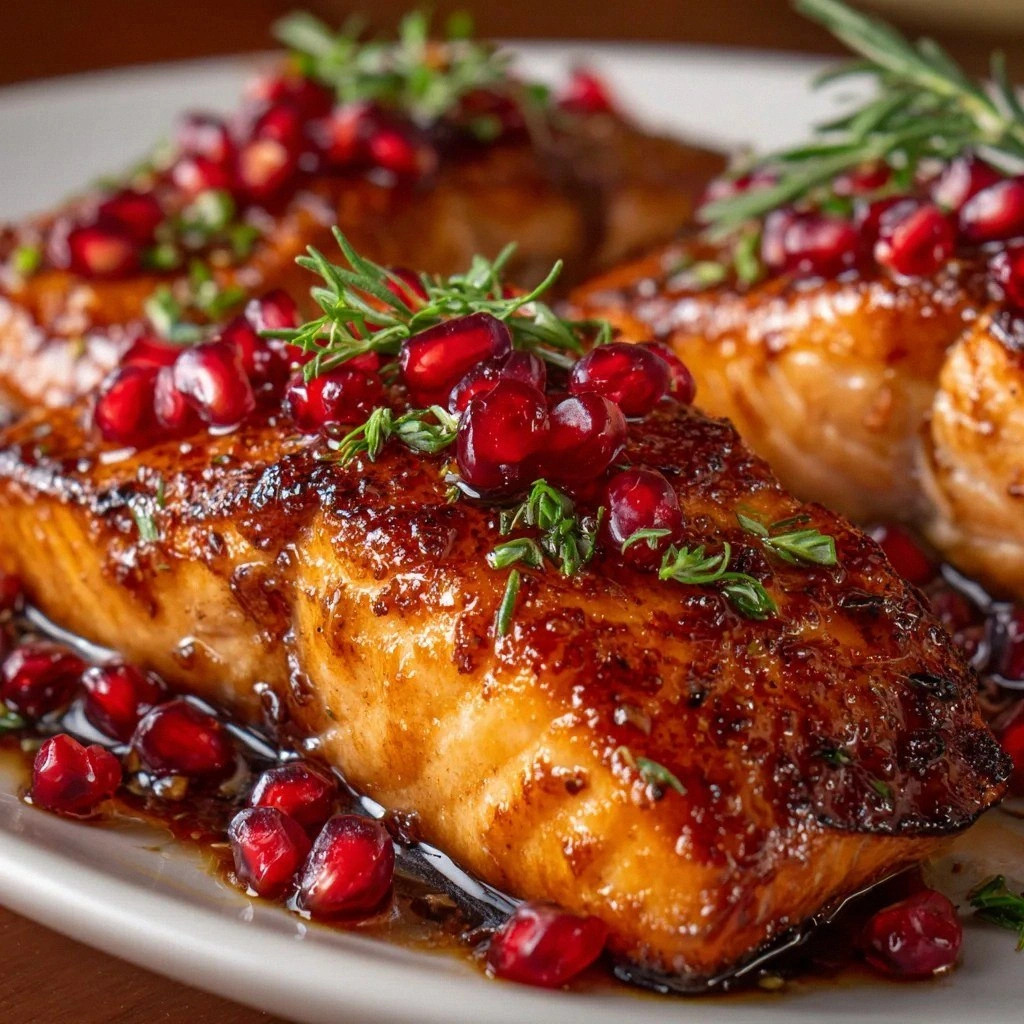
Picture this: you’re standing in a cramped apartment kitchen, the clock ticking toward a dinner deadline, and the only thing you can think of is a salmon fillet that’s looking a little too pale to be appetizing. You reach for a bottle of pomegranate juice, a jar of honey, and a splash of soy sauce, and suddenly the idea hits you like a lightning bolt—pomegranate glazed salmon. That was the moment that turned a culinary misstep into a mouth‑watering revelation, and I’ve been obsessed with this dish ever since. The bright ruby glaze, the sweet‑tart kick of pomegranate, and the subtle umami from soy sauce create a flavor profile that feels like a party in your mouth. I dare you to taste this and not go back for seconds; the glaze coats the fish like velvet, sealing in moisture while giving it a caramelized edge that shatters like thin ice when you bite through it.
I remember the first time I tried it: the salmon was seared to a golden crisp, the glaze bubbled to a glossy finish, and the aroma filled the room, making even the most skeptical of me swoon. The texture is a delicate balance—crispy on the outside, tender and flaky inside—while the pomegranate seeds add a satisfying pop of crunch. The sauce, a sweet‑tart, umami‑rich glaze, is the secret weapon that turns an ordinary fillet into a showstopper. This version stands out because it uses simple pantry staples, yet the combination of flavors feels like a gourmet dish that you can make in under an hour. And the best part? You don’t need to be a master chef; just follow my steps, and you’ll create a dinner that looks as stunning as it tastes.
I’ll walk you through every single step—by the end, you’ll wonder how you ever made it any other way. From the moment you lay the fillets on the plate to the final sprinkle of pomegranate seeds, each step is crafted to bring out the best in the salmon. I’ll share micro‑challenges that will push your palate, bold claims about the dish’s superiority, and confessions that I’ve already devoured half of the batch before anyone else could even taste it. You’ll see why most recipes get this completely wrong and how I’ve perfected the technique. Picture yourself pulling this out of the oven, the whole kitchen smelling incredible, and your guests lining up for seconds. Stay with me here—this is worth it.
Now, let’s dive into the heart of the dish: the ingredients that make it sing. Each component has a purpose, and together they create a symphony of flavors that will have your taste buds dancing. I’ve broken them into groups to help you understand why each is essential and how you can tweak them if you’re feeling adventurous. Trust me, once you understand the roles of these ingredients, you’ll be able to improvise like a pro. If you’re ready for the next level, keep reading. This is going to be a delicious adventure.
What Makes This Version Stand Out
- Flavor Depth: The combination of pomegranate juice and soy sauce creates a complex sweet‑savory profile that outshines simple glaze recipes.
- Texture Contrast: The glaze caramelizes to a crisp, glassy finish while the salmon stays moist and flaky inside.
- Ingredient Simplicity: Only nine items, all pantry‑friendly, so you can whip this up on a busy weeknight.
- Visual Appeal: The ruby glaze and bright pomegranate seeds make the dish Instagram‑ready.
- Make‑Ahead Friendly: You can prepare the glaze in advance and reheat the salmon without sacrificing quality.
- Health‑Forward: Salmon provides omega‑3s, pomegranate is antioxidant‑rich, and the glaze is low in added sugars.
- Crowd‑Pleaser: Even the most skeptical diners will be begging for the recipe after tasting this.
- Seasonality: Pomegranate is at its peak in fall, giving this dish a seasonal flair.
Alright, let's break down exactly what goes into this masterpiece...
Inside the Ingredient List
The Flavor Base
Pomegranate juice is the star of the show, offering a sweet‑tart punch that pairs beautifully with the richness of salmon. Use 100% juice to avoid added sugars that can flatten the flavor. If you can’t find pomegranate juice, a mix of cranberry and apple juice works as a decent substitute, though the tartness will differ slightly.
Honey brings a natural sweetness that balances the acidity of the pomegranate. A tablespoon and a half will give you enough depth without turning the glaze into a syrup. For a lighter version, try replacing half the honey with maple syrup; the result is a subtle maple note that complements the fruit.
Soy sauce adds a savory umami layer that anchors the glaze. Opt for low‑sodium if you’re watching salt intake, but remember that soy sauce can be surprisingly salty; start with a smaller amount and adjust to taste. If you’re vegan, tamari is a great soy‑free alternative.
The Texture Crew
Olive oil is more than just a cooking medium; it helps the glaze adhere to the salmon and adds a subtle fruity undertone. A tablespoon is enough to coat the fillets lightly and prevent sticking. If you’re looking for a smoky flavor, use a small amount of smoked paprika in the glaze.
Garlic infuses the glaze with a savory aroma that complements the sweetness. Two cloves, finely minced, are ideal. If you’re sensitive to raw garlic, sauté it briefly before adding the glaze to mellow its bite.
The Unexpected Star
Pomegranate seeds are the final flourish that adds a burst of color, texture, and a burst of juicy sweetness with every bite. A half cup is enough to sprinkle over four fillets. For a crunchier experience, toast the seeds lightly in a dry skillet for a minute before adding.
The Final Flourish
Salt and pepper are the simplest yet most powerful seasonings. Salt enhances the salmon’s natural flavor, while pepper adds a subtle heat. Use them sparingly—too much can overpower the delicate glaze. I like to season the fillets just before searing so the salt doesn’t draw out moisture.
Everything's prepped? Good. Let's get into the real action...
The Method — Step by Step
- Prep the fillets: Pat the salmon dry with paper towels. Season both sides with salt and pepper. This simple step locks in moisture and ensures the glaze adheres evenly.
- Make the glaze: In a small saucepan, combine pomegranate juice, honey, soy sauce, olive oil, and minced garlic. Bring to a gentle simmer over medium heat, stirring constantly. Watch for the glaze to thicken—when it coats the back of a spoon, it’s ready.
- Reduce the glaze: Reduce the heat to low and let it simmer for an additional 5 minutes, allowing the flavors to meld. The glaze should have a syrupy consistency that will cling to the salmon.
- Heat the pan: Preheat a non‑stick skillet over medium‑high heat. Add a splash of olive oil to coat the surface. The pan should be hot enough that the salmon sizzles upon contact.
- Sear the salmon: Place the fillets skin‑side down in the pan. Sear for 4–5 minutes until the skin is crisp and the underside is golden. Flip carefully using a spatula.
- Apply the glaze: Brush the glaze generously over the top of each fillet. The glaze will bubble and caramelize, forming a glossy coating. Keep the heat medium to prevent burning.
- Finish cooking: Reduce the heat to low, cover the pan, and let the salmon cook for another 3–4 minutes, or until the internal temperature reaches 145°F. The glaze should be thick and sticky.
- Plate and garnish: Transfer the fillets to a serving platter. Drizzle any remaining glaze over the top, then scatter pomegranate seeds for color and crunch. Serve immediately.
That's it — you did it. But hold on, I've got a few more tricks that'll take this to another level. Trust me, a few simple tweaks can elevate the dish from great to unforgettable.
Insider Tricks for Flawless Results
The Temperature Rule Nobody Follows
Many cooks underestimate the importance of pan temperature. A hot pan ensures a crisp skin, while a cooler pan allows the salmon to cook evenly without drying out. Use a thermometer or the water droplet test: drop a few drops of water into the pan; if they sizzle and evaporate instantly, the pan is ready.
Why Your Nose Knows Best
Before you flip the salmon, pause and smell the glaze. A sweet aroma indicates the glaze is caramelizing properly. If it smells overly sweet or burnt, lower the heat immediately. Your nose is a reliable indicator of doneness.
The 5‑Minute Rest That Changes Everything
Let the salmon rest for five minutes after cooking. This allows the juices to redistribute, keeping the fillet moist and tender. The glaze will thicken slightly during this rest, giving it a glossy finish.
Use Fresh Pomegranate Seeds
Fresh seeds add a bright, juicy contrast to the sweet glaze. If you can’t find fresh pomegranates, frozen seeds work; just thaw and pat dry before sprinkling to avoid excess moisture.
Add a Splash of Citrus
A squeeze of fresh lemon or lime just before serving adds a bright, zesty counterpoint to the sweet glaze. It also brightens the overall flavor profile, making each bite feel lighter.
Creative Twists and Variations
This recipe is a playground. Here are some of my favorite ways to switch things up:
Spicy Pomegranate Glaze
Add a pinch of cayenne or a splash of sriracha to the glaze for a spicy kick. The heat balances the sweetness and adds a layer of complexity that pairs wonderfully with the salmon.
Herb‑Infused Version
Stir in fresh rosemary or thyme into the glaze before simmering. The earthy herbs complement the fruitiness of the pomegranate and create a Mediterranean twist.
Citrus‑Burst Variation
Replace half the pomegranate juice with orange or grapefruit juice and add a zest of the same citrus. This gives the glaze a bright, tropical flavor profile.
Smoky Salmon
Marinate the fillets in a mixture of smoked paprika, cumin, and a dash of liquid smoke before cooking. The smoky undertones mingle with the sweet glaze for a bold flavor.
Pomegranate‑Honey Glazed Tofu
Swap salmon for firm tofu for a vegetarian version. Press the tofu, slice it, and sear until golden before glazing. The tofu absorbs the glaze beautifully.
Glazed Salmon with Avocado Salsa
Top the finished salmon with a fresh avocado salsa made of diced avocado, cilantro, lime juice, and red onion. The creamy avocado balances the sweet glaze and adds a refreshing contrast.
Storing and Bringing It Back to Life
Fridge Storage
Cool the salmon completely, then wrap tightly in plastic wrap and store in an airtight container. It stays fresh for up to 2 days. When ready to reheat, gently warm in a skillet over low heat, adding a splash of water or broth to keep it moist.
Freezer Friendly
Freeze the glazed salmon in a freezer‑safe bag or container for up to 3 months. Thaw overnight in the fridge before reheating. The glaze may separate slightly; a quick stir before serving restores the glossy finish.
Best Reheating Method
Reheat in a preheated oven at 350°F for 10 minutes, or until warmed through. If the glaze looks dry, drizzle a tiny splash of water or broth before covering the pan with foil. The steam will help the glaze re‑glimmer.