Picture this: it's Sunday morning, the house is still quiet, and you're standing in your kitchen with flour on your nose and a mission in your heart. You want something that'll make the whole family abandon their phones and gather around the table like it's 1995. Something that smells so good your neighbors will invent reasons to drop by. Something that combines the joy of pulling apart warm bread with the guilty pleasure of licking sticky sugar off your fingers. Enter the best monkey bread you'll ever make — and yes, I'm making the bold claim right now that this version will ruin all other monkey breads for you forever.
Let me back up a bit. Last month, I was in a full-on baking rut. I'd made banana bread seventeen different ways, my sourdough starter was giving me attitude, and even chocolate chip cookies felt boring. Then my nephew dared me to make monkey bread "better than the mall version," and friends, I've never backed down from a food dare in my life. What followed was three weeks of obsessive testing, three pounds of butter, and a kitchen that looked like a sugar bomb exploded. The result? A monkey bread so outrageously good that I ate half the pan while it was still too hot to handle, burning my tongue and not even caring.
Most monkey bread recipes get it completely wrong — they either turn out dry and bready or so sweet your teeth ache. They use canned biscuit dough that tastes like the aluminum tube it came in, or they skimp on the buttery coating that makes each piece a revelation. This version gets every single element right: soft, tender dough that pulls apart like clouds, a caramelized brown sugar coating that's perfectly balanced between sweet and salty, and a texture that manages to be both chewy and melt-in-your-mouth at once.
The secret isn't one thing — it's a combination of techniques that most recipes skip. We make our own dough (trust me, it's easier than you think), we use a specific ratio of brown sugar to butter that creates the perfect sticky coating, and we add a surprise ingredient that makes the whole thing taste like it came from a professional bakery. Picture yourself pulling this out of the oven, the whole kitchen smelling like butterscotch and heaven, while everyone gathers around like you're about to reveal buried treasure. Stay with me here — this is worth it.
What Makes This Version Stand Out
Before we dive into the nitty-gritty, let me tell you exactly why this monkey bread will become your new obsession. I've tested this recipe on picky kids, skeptical adults, and one particularly judgmental food blogger friend who claimed she "doesn't do sweet breakfast foods." They all went back for thirds. Here's what makes it special:
- Unbeatable Texture: The combination of homemade dough with the perfect rise time creates pieces that are simultaneously fluffy and chewy, with caramelized edges that shatter like thin ice when you bite into them. Each ball is coated in a buttery brown sugar mixture that creates a glossy, sticky exterior without becoming soggy.
- Perfect Sweetness Balance: Most monkey breads are sugar bombs that leave you in a diabetic coma. This version uses a specific ratio of brown sugar to white sugar, plus a touch of honey that creates depth without overwhelming sweetness. The result is a treat you can actually enjoy with coffee without feeling like you just ate dessert for breakfast.
- Make-Ahead Magic: You can prep this the night before and bake it fresh in the morning. The dough actually improves with an overnight rest, developing more flavor and becoming even easier to work with. Morning you will thank night you for this foresight.
- Ingredient Quality Matters: Using European-style butter with higher fat content creates a richer, more luxurious coating. The vanilla extract goes in at the perfect moment to preserve its flavor, and we use real maple syrup instead of corn syrup for a cleaner, more complex sweetness.
- Fail-Proof Technique: The coating method ensures every piece is perfectly covered without becoming greasy. The baking temperature creates those coveted crispy edges while keeping the inside soft and pillowy. Even if you've never made bread before, the step-by-step process guarantees success.
- Endless Customization: Once you master the base recipe, you can create dozens of variations. Add citrus zest for brightness, swap in different sugars for unique flavors, or incorporate nuts and dried fruits. It's like getting twenty recipes for the price of one.
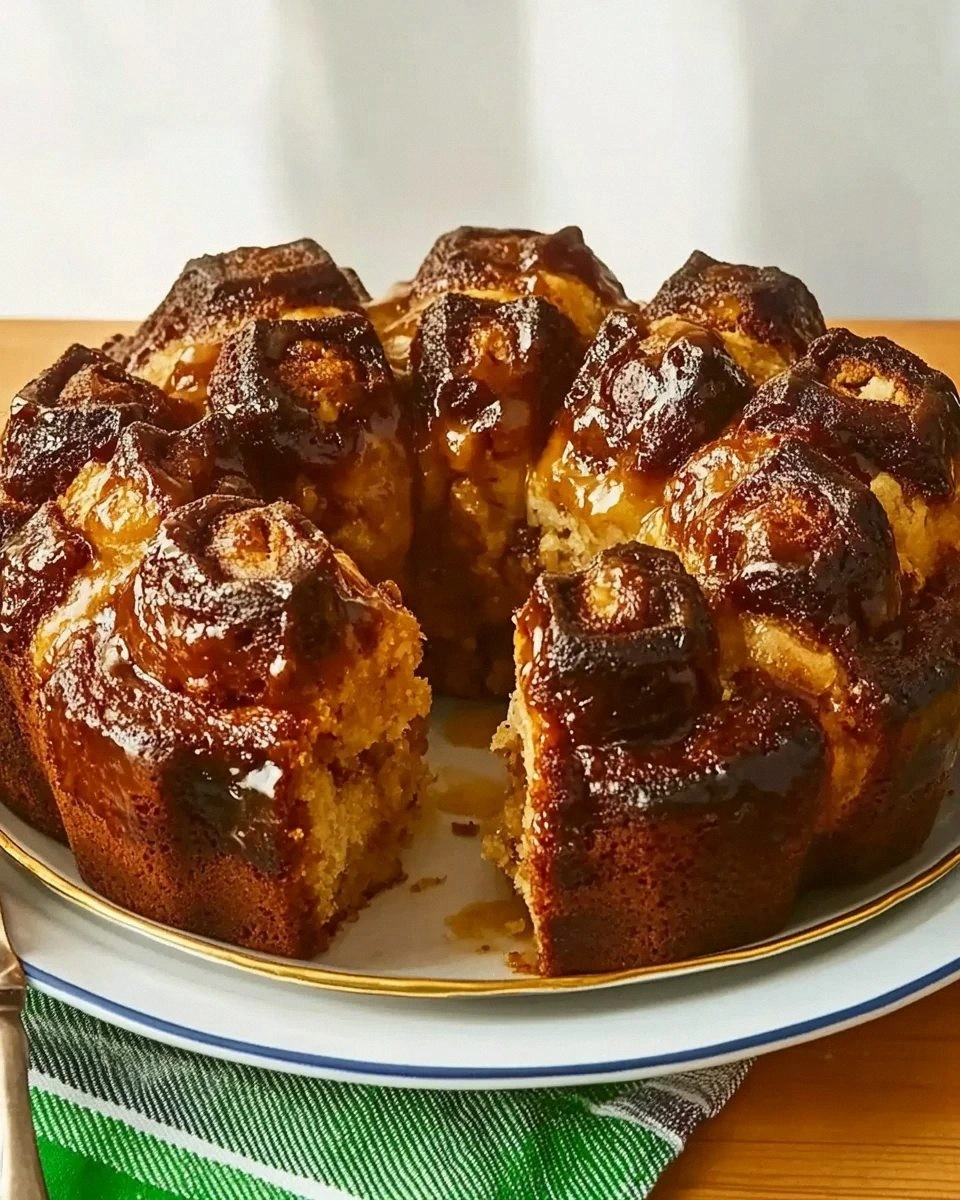
- Visual Drama: This isn't just delicious — it's a showstopper. When you flip it out of the pan, you get a gorgeous crown of glossy, caramel-coated dough balls that looks like it came from a fancy bakery. Your Instagram will thank you.
Alright, let's break down exactly what goes into this masterpiece. The ingredient list might look standard at first glance, but each component has been carefully selected and proportioned to create something extraordinary. Get ready to meet your new favorite baking project.
Inside the Ingredient List
Great baking is all about understanding how each ingredient contributes to the final product. This isn't just a list of stuff you throw together — it's a carefully orchestrated team where every player has a specific job. Let me introduce you to the cast of characters that'll make your kitchen smell like heaven.
The Flavor Foundation
The base of our monkey bread starts with all-purpose flour, but not just any flour — you want one with moderate protein content (around 10-11%) to give the dough enough structure without making it tough. Bread flour creates too much gluten and results in chewy, dense balls, while cake flour doesn't provide enough structure and your pieces will collapse into sad, mushy puddles.
Whole milk is our liquid of choice for its fat content and flavor. Water works in a pinch, but milk creates a more tender crumb and adds subtle richness that water simply can't match. The proteins in milk also help with browning, giving you those gorgeous golden edges that make monkey bread so visually appealing.
Granulated sugar does more than sweeten — it helps feed the yeast for a better rise, tenderizes the gluten for a softer texture, and contributes to that beautiful golden-brown color. Don't be tempted to reduce it too much; sugar is crucial for both flavor and structure.
The Texture Crew
Active dry yeast is our leavening hero, but here's what most recipes get wrong: they don't activate it properly. You need water that's exactly 105-110°F — too hot and you'll kill the yeast, too cool and it won't bloom. Look for the mixture to become foamy and smell like bread within 5-10 minutes. If it doesn't, your yeast is dead and you need to start over.
Eggs serve multiple masters in this recipe. The yolks add fat for richness and tenderness, while the whites provide structure. Room temperature eggs incorporate more easily into the dough, creating a smoother, more homogenous texture. Take them out of the fridge 30 minutes before you start mixing.
Unsalted butter gives you control over the salt level and contributes to that melt-in-your-mouth texture. European-style butter with 82% fat content creates an even more luxurious result — it's worth the extra cost for special occasions.
The Unexpected Star
Here's where we deviate from traditional monkey bread: we add a tablespoon of honey to the dough. This isn't for sweetness — it's for hygroscopic properties. Honey attracts and retains moisture, keeping your monkey bread soft and fresh for days. It also adds a subtle floral note that makes people ask "what's that amazing flavor?" without being able to place it.
Cornstarch might seem like a strange addition, but just a tablespoon creates a more tender texture by interfering with gluten development. It's the secret ingredient that makes bakery bread so impossibly soft.
The Final Flourish
Brown sugar creates that signature sticky coating, but we're using a mix of light and dark brown sugar. Light brown sugar provides the classic toffee flavor, while dark brown sugar adds deeper molasses notes and extra moisture. The combination creates a more complex, sophisticated sweetness.
Heavy cream in the coating mixture creates a richer, more luxurious sauce that clings to each piece without becoming greasy. The fat content helps carry flavors and creates that glossy finish that makes monkey bread so visually appealing.
Pure vanilla extract goes in at the end of cooking the coating to preserve its volatile compounds. Adding it too early cooks off the flavor, leaving you with expensive brown liquid that tastes like nothing.
Everything's prepped? Good. Let's get into the real action. This next part? Pure magic.
The Method — Step by Step
- Wake Up Your Yeast: In the bowl of your stand mixer (or a large mixing bowl if you're going manual), combine 1 cup of warm whole milk (105-110°F — use a thermometer, this matters), 2 tablespoons of granulated sugar, and 2¼ teaspoons of active dry yeast. Let this mixture sit for 5-10 minutes until it's foamy and smells like a bakery. If nothing happens after 10 minutes, your yeast is dead and you need to start over with fresh yeast. This step is crucial — it's like checking if your car has gas before a road trip.
- Build the Dough Base: To your foamy yeast mixture, add 2 large room-temperature eggs, 4 tablespoons of melted unsalted butter, 3 tablespoons of honey, and 1 teaspoon of vanilla extract. Mix this with the paddle attachment on low speed until everything is combined. The mixture should look like pale yellow soup with a frothy top. Now add 3 cups of all-purpose flour, 1 tablespoon of cornstarch, and 1 teaspoon of salt. Mix on low speed until a shaggy dough forms — it'll look rough and messy, like it needs therapy.
- Knead to Perfection: Switch to the dough hook (or turn out onto a floured surface if you're kneading by hand) and knead for 8-10 minutes. The dough will start rough and sticky, but resist the urge to add flour. After about 5 minutes, it'll transform into a smooth, elastic ball that pulls away from the sides of the bowl. When you poke it, it should spring back slowly, like a memory foam pillow. If it bounces back immediately, it's over-kneaded; if the indentation stays, it needs more time.
- The First Rise: Place the dough in a large, lightly oiled bowl, turning once to coat. Cover with plastic wrap and let rise in a warm spot for 1 to 1½ hours until doubled in size. Here's the test: poke the dough with your finger. If the indentation stays and doesn't spring back, it's ready. If it springs back, give it more time. If it deflates, you over-proofed it — still usable but won't be quite as fluffy.
- Shape the Magic: Punch down the risen dough (this is therapeutic — go ahead, give it a good whack) and turn it out onto a lightly floured surface. Divide it into 8 equal pieces, then divide each piece into 6 smaller pieces, giving you 48 pieces total. Roll each piece into a ball about the size of a large marble. Don't stress about perfect spheres — irregular shapes create those crispy edges we love.
- Create the Coating: In a small saucepan over medium heat, melt 1 cup of unsalted butter. Add ½ cup of light brown sugar, ½ cup of dark brown sugar, ¼ cup of heavy cream, 2 teaspoons of cinnamon, and ¼ teaspoon of salt. Bring to a gentle simmer, stirring constantly until the sugars dissolve and the mixture becomes glossy and thick, about 3-4 minutes. Remove from heat and stir in 1 tablespoon of vanilla extract. It should coat the back of a spoon like thick maple syrup.
- Assemble the Masterpiece: Preheat your oven to 350°F. Grease a 12-cup Bundt pan thoroughly with butter, getting into every nook and cranny. Dip each dough ball in the coating mixture, rolling to coat completely, then layer in the Bundt pan. Pour any remaining coating over the top. Don't worry if it looks like too much liquid — the dough will absorb it during baking, creating that signature sticky texture.
- The Final Rise: Cover the pan with plastic wrap and let rise for 30-45 minutes until the dough has expanded to fill about ¾ of the pan. It won't double like before, but it should look puffy and soft. Meanwhile, clean your kitchen because you're about to make a glorious mess when this comes out of the oven.
- Bake to Glory: Bake for 30-35 minutes until the top is deep golden brown and the caramel is bubbling up the sides. If it's browning too quickly, tent with foil during the last 10 minutes. The smell will drive you absolutely insane — resist opening the oven door or you'll let out the steam that helps cook the center.
- The Flip: Let cool in the pan for exactly 5 minutes — no more, no less. Too short and it'll fall apart; too long and it'll stick like cement. Place a large plate over the pan and invert in one confident motion. Lift off the pan slowly, revealing your golden crown of sticky perfection. Serve immediately while it's warm and pull-apart glorious.
That's it — you did it. But hold on, I've got a few more tricks that'll take this to another level. These insider secrets separate good monkey bread from legendary monkey bread.
Insider Tricks for Flawless Results
The Temperature Rule Nobody Follows
Here's the thing that'll make or break your monkey bread: ingredient temperature matters more than you think. Cold butter won't incorporate properly into the coating, creating greasy pools instead of a smooth caramel. Room temperature eggs mix more evenly into the dough, preventing weird rubbery bits. But here's the kicker — your brown sugar should be fresh and soft, not that rock-hard lump that's been in your pantry since 2019. Hard brown sugar won't dissolve properly, leaving you with grainy, separated coating that tastes like sand.
I learned this the hard way when I made monkey bread for a brunch party using questionable brown sugar from the back of my pantry. The coating seized up into a gritty mess that tasted like sweet dirt. My friends politely ate it anyway, but I could see the disappointment in their eyes. Now I keep my brown sugar in an airtight container with a piece of bread to keep it soft, and I replace it every six months. Trust me, fresh ingredients make the difference between "pretty good" and "oh my god, what is this magic?"
Why Your Nose Knows Best
Professional bakers don't use timers — they use their senses, and you should too. When the monkey bread is perfectly done, your kitchen will smell like butterscotch and toasted nuts, with a hint of vanilla perfume. If you smell burning sugar, you've gone too far. If you don't smell anything yet, it's not ready. That sizzle when the coating hits the hot pan? Absolute perfection. Your nose is more reliable than any timer, especially since ovens vary so much.
I dare you to taste a piece the moment it comes out of the oven and not go back for seconds before it's even cooled. The aroma is part of the experience — it builds anticipation and tells your brain what's coming. When my neighbor's kid smells this baking, he shows up at my door with puppy dog eyes and a plate. I pretend to be surprised every time, but we both know I'm making extra just for him.
The 5-Minute Rest That Changes Everything
Everyone wants to dig in immediately, but here's where patience pays off. Those five minutes of cooling time allow the caramel to thicken slightly, creating that perfect consistency where it's sticky but not runny. It also prevents third-degree burns on your tongue, which trust me, are not fun. During this time, the bread finishes cooking from residual heat, ensuring the center isn't doughy.
Use this time wisely — make coffee, set out plates, round up your family. The anticipation makes it taste even better. Plus, if you wait exactly five minutes before inverting, the bread releases perfectly every time. A friend tried rushing this step once — let's just say it didn't end well, and she served monkey bread soup instead of the impressive pull-apart bread she'd planned.
The Salt Secret
Salt in sweet baked goods is like bass in music — you don't always notice it when it's there, but you definitely miss it when it's gone. That ¼ teaspoon of salt in the coating isn't arbitrary; it balances the sweetness and makes the caramel flavors pop. Without it, your monkey bread will taste flat and one-dimensional, like eating straight sugar. With it, you get a complex, restaurant-quality dessert that keeps people guessing.
I use flaky sea salt for finishing, sprinkling just a tiny bit over the top right after inverting. The contrast between sweet and salty makes every bite more interesting, and the little crystals add a pleasant crunch. It's like the difference between regular TV and HD — once you try it, you can't go back.
Creative Twists and Variations
This recipe is a playground. Here are some of my favorite ways to switch things up:
The Apple Pie Version
Add 1 cup of diced apples (peeled and cut into ¼-inch pieces) to the dough during the last minute of kneading. Replace ½ teaspoon of cinnamon in the coating with apple pie spice. The apples release moisture as they bake, creating little pockets of apple pie filling throughout. Serve with a scoop of vanilla ice cream for the ultimate fall dessert. Kids go crazy for this version, and it makes your house smell like you've been baking apple pies all day.
The Chocolate Lover's Dream
Replace ¼ cup of flour with cocoa powder in the dough. Add ½ cup of mini chocolate chips to the coating mixture, and replace the vanilla with chocolate extract if you can find it. The result is a monkey bread that tastes like a cross between a chocolate croissant and a sticky bun. I'll be honest — I ate half the batch before anyone else got to try it. The chocolate creates little lava pockets that stay melty even after cooling.
The Tropical Escape
Add ½ cup of shredded coconut and ¼ cup of chopped dried pineapple to the dough. Replace the milk with coconut milk and add ½ teaspoon of coconut extract to the coating. This version tastes like a Hawaiian vacation in bread form. The coconut toasts as it bakes, creating little crunchy bits throughout the soft bread. Perfect for winter when you need a taste of summer.
The Savory Brunch Version
Reduce the sugar in the dough to 1 tablespoon and add 1 cup of shredded sharp cheddar, ½ cup of chopped chives, and ¼ cup of cooked, crumbled bacon to the dough. Replace the sweet coating with garlic butter (1 cup butter, 2 cloves minced garlic, 1 teaspoon Italian herbs, ½ teaspoon salt). This savory version is incredible with eggs and transforms monkey bread from dessert to the star of your brunch spread.
The Holiday Spice Edition
Add 1 teaspoon of ground ginger, ½ teaspoon of nutmeg, and ¼ teaspoon of cloves to the dough. Replace the vanilla in the coating with maple extract and add ⅓ cup of chopped pecans to the coating mixture. This version tastes like gingerbread and makes your entire house smell like Christmas morning. I make this every December and give it as gifts to neighbors who then owe me favors for the rest of the year.
The Lemon Blueberry Burst
Add the zest of 2 lemons to the dough and fold in 1 cup of fresh blueberries during the last minute of kneading. Replace the vanilla in the coating with lemon extract and add 1 tablespoon of poppy seeds. The blueberries burst during baking, creating purple swirls and pockets of jammy fruit. This version is lighter and perfect for spring brunches when you want something special but not too heavy.
Storing and Bringing It Back to Life
Fridge Storage
If you somehow have leftovers (I won't judge if you don't), let the monkey bread cool completely, then store in an airtight container at room temperature for up to 3 days. Don't refrigerate it — the cold makes the bread stale faster and changes the texture of the coating. If your kitchen is particularly warm or humid, you can store it in the fridge, but bring it to room temperature before reheating. The bread will absorb moisture from the coating and actually get better on day two, developing a more complex flavor.
Freezer Friendly
Monkey bread freezes beautifully, either baked or unbaked. For unbaked: assemble completely, cover tightly with plastic wrap, then aluminum foil, and freeze for up to 2 months. When ready to bake, thaw overnight in the fridge, let come to room temperature for 1 hour, then bake as directed, adding 5-10 extra minutes. For baked leftovers: wrap individual portions in plastic wrap, then foil, and freeze for up to 1 month. Thaw overnight in the fridge and reheat in a 300°F oven for 10 minutes.
Best Reheating Method
The microwave works in a pinch, but it makes the bread rubbery. Instead, wrap pieces in foil with a tiny splash of water (creates steam) and heat in a 300°F oven for 8-10 minutes. This brings back the fresh-baked texture and reactivates the sticky coating. For single pieces, a toaster oven works perfectly. Add a tiny splash of water before reheating — it steams back to perfection, restoring that just-baked softness and making the coating glossy again.