I still remember the day I swore off stovetop minestrone forever. There I was, juggling three pots, splashing tomato sauce on the ceiling, and somehow ending up with mushy pasta glued to the bottom of my Dutch oven. The soup tasted fine, but my kitchen looked like a crime scene. Fast-forward to a rainy Tuesday when my neighbor dropped off a Tupperware of slow-cooker minestrone that made me see actual cartoon hearts. The broth was silky, every vegetable still had personality, and the pasta had somehow avoided turning into library paste. I begged for the recipe, tweaked it obsessively for months, and now I'm the smug friend who brings a Crock-Pot to potlucks and watches people lick their bowls clean.
This slow-cooker minestrone is the culinary equivalent of that perfect vintage leather jacket: it looks effortless, works with everything, and only gets better with time. We're talking layers of flavor that taste like an Italian grandmother hovered over the pot for hours, except the only hovering you’ll do is opening the lid to inhale the garlic-basil steam that perfumes your entire house. The secret weapon is a quick stovetop sauté that wakes up the aromatics before they take the long, lazy sauna in the slow cooker. Skip that step and you’ll still get soup, but you’ll miss the caramelized depth that makes people close their eyes after the first spoonful.
If you’ve ever been disappointed by watery, cafeteria-style minestrone, prepare for a plot twist. This version is bold enough to serve to company on a snowy night, yet chill enough to portion into mason jars for grab-and-go lunches. It freezes like a dream, reheats like a champion, and—here’s the kicker—actually improves after a night in the fridge when the tomato, oregano, and Parmesan rind throw a flavor party. I dare you to taste it straight from the slow cooker and not go back for seconds before you’ve even found a ladle.
Picture yourself eight hours from now: you walk through the door, kick off your shoes, and the first thing that hits you is the smell of sweet onions that have melted into jammy puddles, mingling with tomatoes that have reduced into velvet. You lift the lid and the escaping steam fogs up your glasses in the most satisfying way. A quick stir, a shower of fresh spinach that wilts on contact, and suddenly dinner is a ladle away. Let me walk you through every single step—by the end, you’ll wonder how you ever made it any other way.
What Makes This Version Stand Out
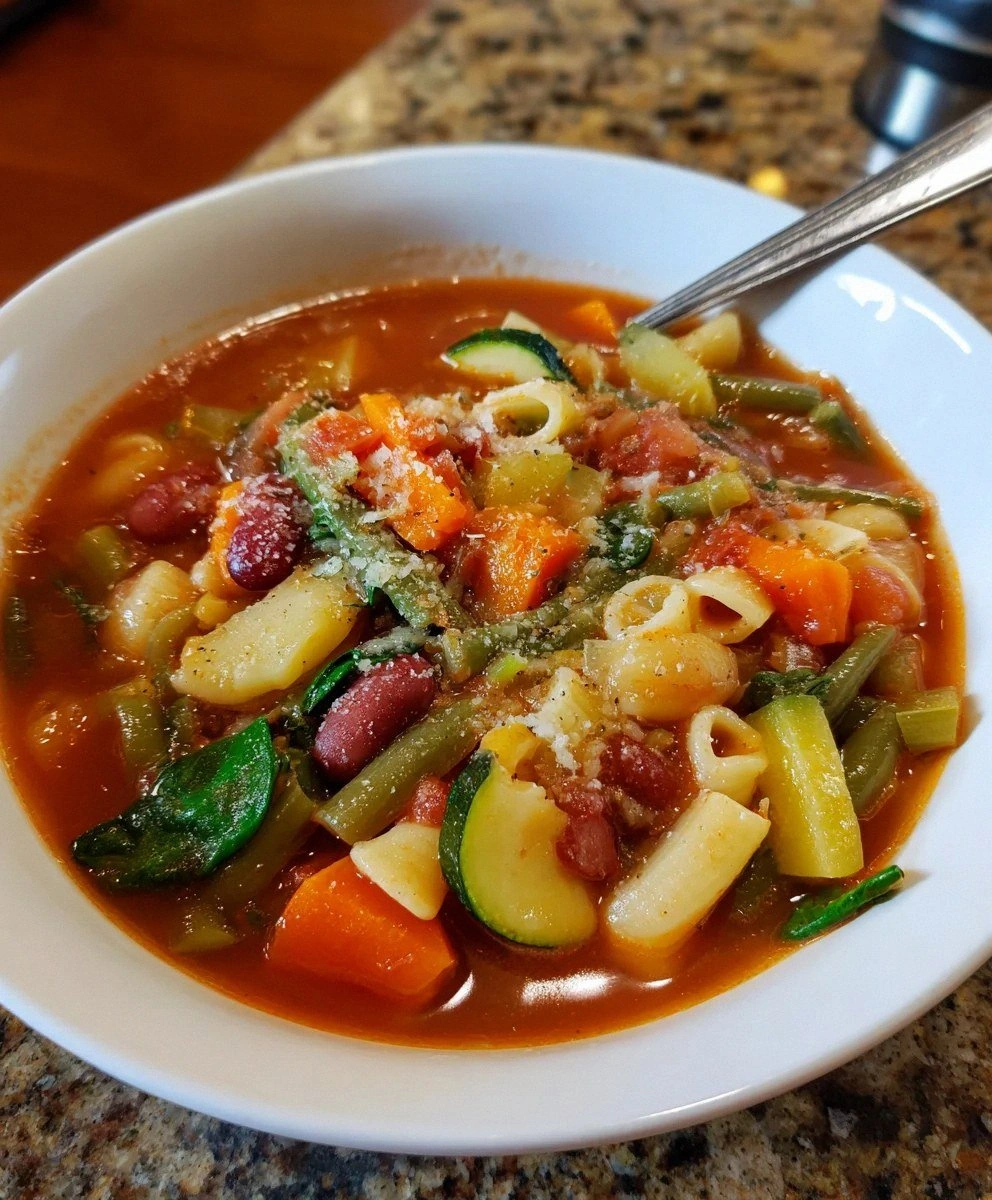
Velvet Broth: Instead of thin, watery soup, we’re building body by crushing half the canned tomatoes directly into the slow cooker and letting the natural pectins thicken the broth while it simmers. The result is a silky texture that clings to every noodle like a cozy blanket.
Vegetable Integrity: Most recipes throw everything in at once and pray. We stagger the additions so the carrots soften but the zucchini keeps a tender bite and the green beans stay shockingly green. Each spoonful is a rainbow of textures, not a monochrome mush.
Pasta That Behaves: Nobody likes bloated, exploded pasta. We cook the ditalini separately until just shy of al dente, then let it swim in the soup for the last ten minutes so it absorbs flavor without going full marshmallow.
Parmesan Rind Alchemy: That rock-hard nub of Parm you’ve been saving in the freezer? It’s a built-in umami bomb. Toss it in at the beginning and by dinnertime it’ll have released nutty, salty magic that no amount of grated cheese can replicate.
Zero Baby-Sitting: Once the slow cooker clicks on, your work is done. No stirring, no adjusting heat, no frantic last-minute seasoning. You can binge Netflix, fold laundry, or take a nap while dinner makes itself.
Leftover Superpowers: This soup tastes even better on day two, which means Sunday prep equals Monday lunchbox victories. Pack it in thermoses and watch your coworkers eye your desk with envy.
Crowd-Size Flexibility: Recipe easily doubles or halves. Hosting book club? Feed an army. Cooking for one? Freeze portions in muffin tins for single-serve pucks that melt into lunch in minutes.
Alright, let's break down exactly what goes into this masterpiece...
Inside the Ingredient List
The Flavor Base
Olive oil is more than a slick of fat; it’s the messenger that carries onion’s sweetness and garlic’s punch into every vegetable. Use a decent everyday oil here—save the fancy finishing oil for drizzling at the end. Onion forms the sugary backbone once it hits that slow, gentle heat for hours. Skip it and the broth tastes flat, like a song missing the bass line. Garlic goes in two waves: first, minced fine so it disappears into the broth, and later, a whisper of fresh micro-planed clove for brightness. If you’re tempted to use pre-minced jarred garlic, I’m not here to judge, but know that the flavor will be more dorm-room ramen than Roman holiday.
Diced tomatoes are the sun-drenched soul of the soup. Buy a brand that lists tomatoes and juice only—no calcium chloride, no basil, no weird preservatives. I crush half the can with my hands directly into the cooker; the juicy pulp thickens the broth naturally while the remaining cubes stay intact for pops of tartness. In a pinch you could swap fire-roasted tomatoes for a smoky twist, but stay away from seasoned varieties that hijack the herb balance.
The Texture Crew
Carrots and celery are the classic rhythm section, but size matters here. Dice them small—think pea-sized—so they soften fully during the long simmer yet don’t dissolve into baby food. Carrots bring honeyed notes that balance tomato acidity, while celery offers a gentle bitterness that keeps the soup from tipping into candy-land. If you loathe celery, swap in diced fennel for a licorice whisper that plays beautifully with basil.
Zucchini walks a tightrope between tender and slimy. We add it halfway through so it surrenders just enough moisture to enrich the broth but still holds its cute half-moons. Pick small, firm zucchini with glossy skin; the giant boat-sized ones are waterlogged and seeded. Green beans should snap audibly when bent—if they bend like a yoga instructor, they’re past prime. Trim the ends, line up the beans like soldiers, and slice into bite-size pieces so diners get a bean in every spoonful without knife gymnastics.
The Unexpected Star
Kidney beans are the protein-packed plot twist that transforms light soup into stick-to-your-ribs dinner. Drain and rinse them unless you enjoy the metallic aftertaste of canning liquid. If you’re cooking for skeptics who claim beans taste like “dirt,” swap in creamy cannellini or even chickpeas for nutty sweetness. For the truly bean-averse, shredded cooked chicken works, but you’ll lose the vegetarian badge and the lovely maroon color that bleeds into the broth.
Small pasta is the edible confetti that makes kids and grown-ups cheer. Ditalini is traditional—tiny tubes that catch broth like microscopic straws—but elbows work in a pinch. Avoid long noodles; they tangle around your spoon and slap your chin. Gluten-free brown-rice pasta holds up surprisingly well, but cook it separately until just pliable, then rinse in cold water to halt the starch attack.
The Final Flourish
Fresh spinach is the emerald curtain call that wilts on contact and adds a mineral pop. Baby spinach saves stem-trimming time, but mature spinach has deeper flavor—your call. If spinach isn’t your jam, try chopped kale or chard; just strip the tough ribs first. Parmesan cheese is optional only if you’re dairy-free; otherwise, grate it fresh so it melts into gossamer threads rather than the sawdust you shake from a green can. A final drizzle of good olive oil adds peppery polish that makes restaurant diners swoon.
Everything's prepped? Good. Let's get into the real action...
The Method — Step by Step
- Heat a splash of olive oil in a skillet over medium heat until it shimmers like a mirage. Add the chopped onion and cook, stirring occasionally, until the edges turn translucent and start to blush golden—about five minutes. You want the onion to sweat, not brown, so if you see color developing, knock the heat down a notch. The goal is sweetness, not bitter char. Toss in the minced garlic and stir for thirty seconds; the moment it smells like you’ve walked into an Italian trattoria, remove the skillet from heat. This quick sauté wakes up the aromatics so they don’t snooze through the long slow-cooker nap.
- Transfer the onion-garlic mixture to the slow cooker insert. Pour in the diced tomatoes with all their juice, then use clean hands to crush half the tomato cubes directly into the pot. Yes, hands—they’re your best kitchen tool and tomatoes aren’t hot yet. Feel free to channel your inner toddler and squish with glee; the irregular pulp creates rustic texture. Add the vegetable broth, kidney beans, carrots, celery, oregano, basil, and a Parmesan rind if you’ve been hoarding one. Give everything a gentle stir, cover, and set the cooker to low for six hours or high for three.
- Midway through cooking—around hour three on low or hour one and a half on high—open the lid and inhale. The broth should already smell like you’re lounging in a Tuscan garden. Now add the zucchini and green beans, re-cover, and let them simmer until tender but still vibrant. This staggered timing prevents the zucchini from dissolving into anonymous green mush and keeps the beans perky. If you’re away from the house all day, you can add them at the beginning; the soup will still taste great, just know the vegetables surrender more color.
- While the soup finishes, bring a small pot of salted water to a boil and cook the ditalini for two minutes less than package directions. You want it chalky in the center because it will finish cooking in the hot soup. Drain, rinse under cold water to stop the starch, and toss with a drizzle of olive oil so the tubes don’t fuse into a pasta brick. Set aside until serving time. This extra pot might feel fussy, but it’s the insurance policy against bloated, exploded noodles that absorb all your precious broth overnight.
- Just before serving, stir in the fresh spinach and watch it wilt into silky ribbons within thirty seconds. Taste the broth and season boldly with salt and pepper; slow cookers mute flavors, so be brave. Fish out the Parmesan rind—it will be soft and chewed-looking, having donated its soul to the soup. Ladle the soup over the pre-cooked pasta in bowls so each person gets the correct pasta-to-soup ratio. Serve hot, passing grated Parmesan and a cruet of your best olive oil for drizzling. That first spoonful should make you close your eyes involuntarily.
That's it—you did it. But hold on, I've got a few more tricks that'll take this to another level...
Insider Tricks for Flawless Results
The Temperature Rule Nobody Follows
Most slow-cooker recipes treat low and high as interchangeable, but the difference is twenty degrees and a whole lot of flavor chemistry. Low heat (around 190°F) coaxes vegetables into releasing sugars slowly, creating a mellow, integrated broth. High heat (about 210°F) races to the finish line and can leave you with sharp tomato edges and squeaky beans. If you have the luxury of time, always choose low for the full six hours. Need dinner faster? Use high, but add a teaspoon of honey to round the acidity and taste for seasoning earlier—evaporation happens faster than you think.
Why Your Nose Knows Best
Seasoning at the end isn’t just a chef flex; it’s survival. Slow cookers trap moisture, so salt concentrates as the soup simmers. Add half the salt at the beginning, then adjust thirty minutes before serving when the flavors have married and you can taste the real baseline. Same rule applies to dried herbs—oregano and basil can turn bitter if they stew too long. A micro-grating of fresh garlic or a pinch of dried added in the last hour brightens everything like a squeeze of lemon on roasted fish.
The 5-Minute Rest That Changes Everything
Once the spinach wilts, kill the heat and let the soup rest for five minutes with the lid slightly ajar. This brief pause allows the temperature to drop just enough that the broth stops bubbling like Vesuvius and the flavors settle. Ladle immediately and you’ll scorch your tongue; wait five and every spoonful tastes balanced. Plus, the pasta warms through without overcooking, and the Parmesan melts into delicate threads instead of rubbery clumps. Good things come to those who wait—especially when those good things involve cheese.
Creative Twists and Variations
This recipe is a playground. Here are some of my favorite ways to switch things up:
Smoky Bacon Minestrone
Render two strips of diced bacon in the skillet before sautéing the onion. The smoky fat infuses the entire soup with campfire vibes that pair beautifully with the tomatoes. Skip the Parmesan rind and finish with a drizzle of balsamic glaze for sweet-tart fireworks. Carnivores will swear you slipped in a ham hock.
Summer Garden Version
Swap zucchini for yellow squash, add a handful of fresh corn kernels, and toss in chopped basil at the very end for a bright, sunshine-in-a-bowl experience. Use fresh tomatoes instead of canned—just blanch, peel, and crush them. The broth will be lighter, more refreshing, and taste like you bottled July.
Spicy Calabrian
Stir in a teaspoon of Calabrian chili paste with the garlic for a slow-building heat that blooms after you swallow. Add a can of chickpeas alongside the kidney beans for extra creaminess. Finish with a grating of lemon zest and a swirl of pesto for herbaceous fire and ice.
Creamy Tuscan
During the last thirty minutes, whisk in a quarter cup of mascarpone or cream cheese until it melts into velvety richness. The result is pink-hued and luxurious, perfect for date night. Serve with crusty garlic bread and prepare to be proposed to.
Greens-Heavy Detox
Double the spinach and add a cup of chopped kale plus a handful of frozen peas for color. Replace half the pasta with canned white beans for extra fiber. Finish with a squeeze of lemon and a drizzle of peppery olive oil for a soup that tastes like spa food but feels like comfort.
Seafood Celebration
Stir in peeled shrimp during the last ten minutes—they’ll poach gently and turn coral-pink. Add a pinch of saffron for bouillabaisse vibes and swap the oregano for thyme. Serve with garlicky crostini and pretend you’re dining on the Amalfi Coast.
Storing and Bringing It Back to Life
Fridge Storage
Let the soup cool completely, then ladle into airtight containers. Keep the pasta separate in its own container so it doesn’t hog the broth. Properly stored, the soup lasts four days, though mine rarely survives two because midnight raids happen. Always reheat only what you plan to eat; repeated warming dulls the flavors like a rerun you’ve seen too many times.
Freezer Friendly
Portion cooled soup (again, no pasta) into freezer bags, press out excess air, and lay flat to freeze into stackable slabs. Label with blue painter’s tape—trust me, you won’t remember if it’s chili or minestrone in three weeks. Freeze for up to three months. Thaw overnight in the fridge or use the defrost setting on your microwave, then reheat gently on the stove.
Best Reheating Method
Combine the desired amount of soup and pasta in a small pot with a splash of water or broth. Warm over medium-low, stirring occasionally, until heated through but not boiling furiously. Taste and adjust seasoning—freezing can mute salt, so a pinch might be necessary. Serve with fresh spinach and a shower of Parmesan to make it feel brand new.