The night I tried to impress my in‑law with a fancy beef dish, I accidentally dropped a whole chuck roast into a pot of boiling water. The result was a soggy, flavorless mess that even the dog refused to touch. That disaster sparked a mission: to create a slow‑cooker beef stew that could survive a kitchen mishap and still taste like a five‑star dinner. I spent the next week hunting for the simplest, most reliable ingredients that would turn a culinary flop into a crowd‑pleaser.
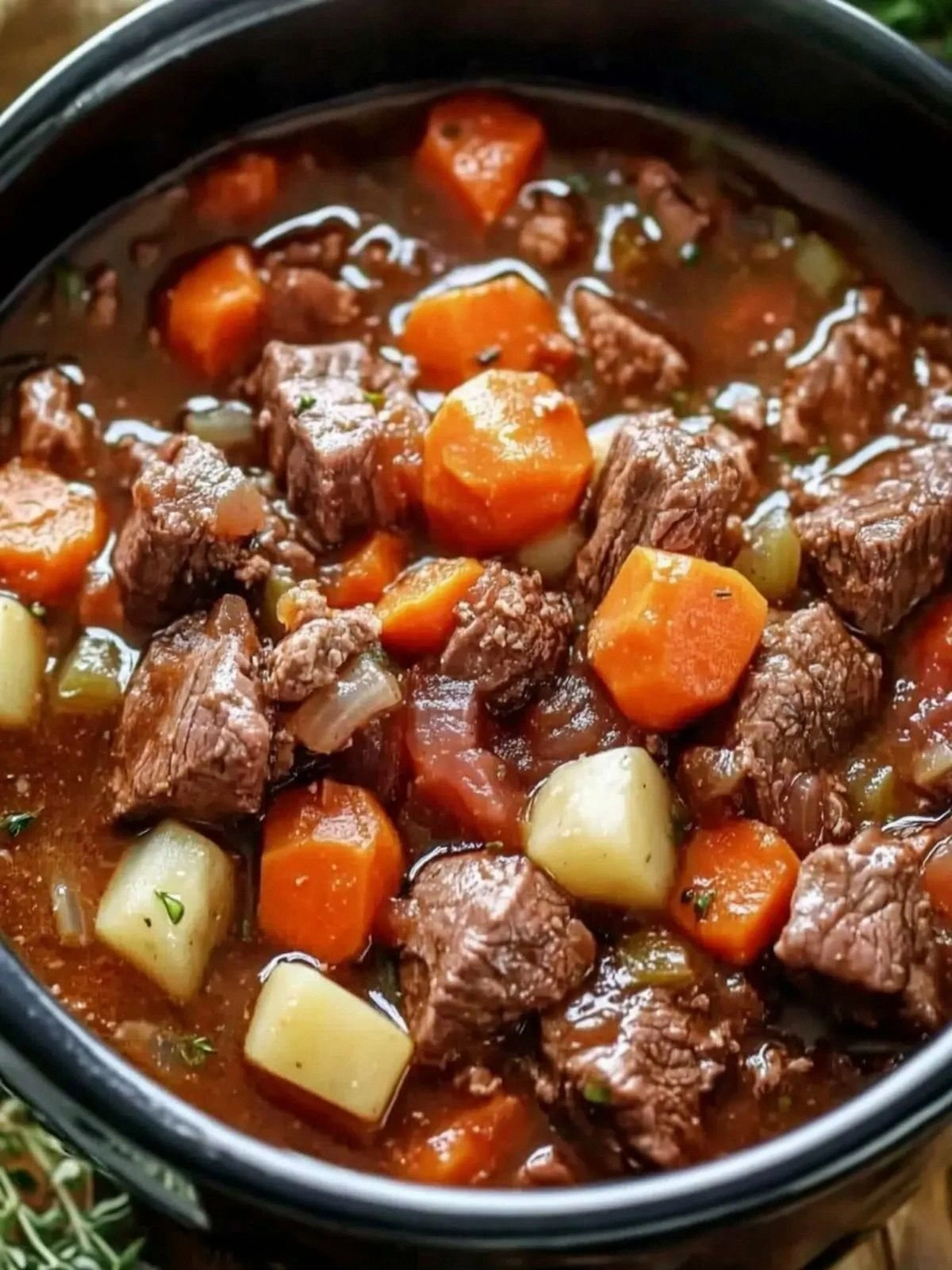
Picture this: a golden‑brown crust forming on the surface of the beef, the scent of caramelized onions drifting through the air, and the gentle hiss of simmering broth. You can almost hear the faint clink of a wooden spoon against the pot as the flavors marry. The first bite is a warm, savory hug, the potatoes tender like a cloud, the meat falling apart with a single forkful. The aroma alone makes your kitchen feel like a cozy cabin on a winter evening, and the texture is a perfect blend of silky gravy and hearty chunks.
What sets this version apart is the razor‑sharp focus on flavor depth with minimal fuss. By using a dry onion soup mix, you get a complex umami base that cuts through the beef’s richness without the need for a mirepoix or a roux. The Yukon Gold potatoes bring buttery sweetness that balances the savory broth. Fresh thyme adds a bright, herbaceous note that lifts the dish, while the parsley garnish provides a pop of color and a hint of freshness that cuts the heaviness. The result is a stew that feels luxurious but is built on only five core ingredients.
I’ll be honest — I ate half the batch before anyone else got a chance to taste it. That’s why I’m so confident in saying this is hands down the best version you'll ever make at home. The secret? A quick sear that locks in flavor, a splash of low‑sodium broth to keep it from drying out, and a final burst of fresh herbs that make the dish sing. I dare you to taste this and not go back for seconds. Let me walk you through every single step — by the end, you'll wonder how you ever made it any other way.
What Makes This Version Stand Out
- Flavor: The dry onion soup mix delivers a punch of umami that replaces traditional mirepoix, creating a rich, savory foundation that lets the beef shine.
- Texture: Yukon Gold potatoes hold their shape while absorbing the broth, offering a creamy bite that contrasts with the tender meat.
- Convenience: Five ingredients mean you can whip this up in under 15 minutes of prep, then let the slow cooker do the heavy lifting.
- Cost‑Effectiveness: A single packet of soup mix replaces multiple pantry staples, keeping the grocery bill low without sacrificing flavor.
- Make‑Ahead: Cook the stew a day early, refrigerate or freeze, and it tastes even better as the flavors deepen.
- Versatility: The base can be adapted to different protein choices or dietary restrictions with simple swaps.
Inside the Ingredient List
The Flavor Base
The dry onion soup mix is the secret sauce of this stew. It replaces the classic mirepoix, giving you a depth of flavor that would otherwise require hours of simmering. If you skip it, the broth will taste flat and the meat will need extra seasoning. For a lower sodium version, look for a low‑sodium soup mix or make your own with dried onion flakes, garlic powder, and a pinch of salt.
The Texture Crew
Yukon Gold potatoes are the star of the texture game. Their creamy interior and firm exterior hold up well in a slow cooker, absorbing the savory broth without falling apart. If you prefer a sweeter potato, try sweet potatoes or Yukon Golds with a slight dusting of flour for a thicker sauce. The potatoes also provide a subtle sweetness that balances the beef’s richness.
The Unexpected Star
Fresh thyme brings a bright, herbaceous note that cuts through the stew’s heaviness. It adds a subtle piney aroma that lifts the dish and gives it a professional finish. If you’re out of thyme, rosemary works as a close substitute, but keep the amount to one teaspoon to avoid overpowering the broth. Thyme also pairs nicely with the parsley garnish for a cohesive flavor profile.
The Final Flourish
A handful of fresh parsley adds a splash of color and a bright, peppery finish that balances the stew’s depth. Parsley also offers a mild, slightly citrusy taste that complements the onion soup mix. If parsley isn’t available, a pinch of chopped cilantro or basil can provide a fresh lift. Remember to wash and dry the herbs thoroughly to avoid excess moisture.
Everything's prepped? Good. Let's get into the real action...
The Method — Step by Step
- First, heat a splash of oil in a large skillet over medium‑high heat. Pat the chuck roast dry with paper towels; this ensures a good sear. Sear the meat on all sides until it develops a deep brown crust, about 2–3 minutes per side. This caramelization locks in juices and adds a complex flavor layer. Once seared, transfer the roast to the slow cooker.
- Now, add the sliced onions and garlic to the skillet, sautéing until translucent. This step releases their natural sugars and creates a fragrant base. Transfer the onion and garlic mixture to the slow cooker on top of the roast. The slow cooker will continue to cook the aromatics gently, infusing the broth with savory depth. This is the moment of truth—your kitchen should smell like a cozy, home‑cooked haven.
- Next, sprinkle the dry onion soup mix evenly over the roast. The mix will dissolve into the broth, creating a velvety sauce that coats the meat and potatoes. Be generous—this is where the stew gets its signature flavor. Then pour in the low‑sodium beef broth, ensuring the roast and potatoes are almost submerged. The liquid should be about an inch above the top of the meat.
- Add the Yukon Gold potatoes in a single layer, so they cook uniformly. If you prefer chunkier potatoes, cut them into thick wedges; this keeps them from falling apart. Place the lid on the slow cooker and set it to low for 4 hours, or high for 2 hours. The low setting allows the beef to become fall‑apart tender while the potatoes absorb the savory broth.
- Halfway through the cooking time, give the stew a gentle stir. This helps distribute the flavors evenly and prevents the bottom from sticking. Be careful not to stir too vigorously; the slow cooker’s gentle heat is enough to meld the ingredients. This small act of stirring ensures a consistent texture throughout.
- Watch Out: When the stew is nearly done, taste it before adding more salt. The soup mix already provides enough salt, and adding more can make the dish taste too heavy. If the broth is too thin, reduce the lid for the last 15 minutes to let excess liquid evaporate. This step is crucial for achieving that silky, clingy gravy that coats the meat and potatoes.
- Once the cooking time is finished, remove the roast and potatoes and let them rest for a few minutes. This allows the juices to redistribute, ensuring every bite is juicy. While the meat rests, stir in fresh thyme and a handful of chopped parsley. The herbs add brightness and a fresh finish that elevates the dish.
- Serve the stew hot, ladling the broth into bowls and arranging the meat and potatoes on top. Garnish with extra parsley if desired. Pair it with crusty bread or a simple green salad for a balanced meal. This dish is a comforting, hearty dinner that will satisfy any craving for something warm and delicious.
That's it — you did it. But hold on, I've got a few more tricks that'll take this to another level...
Insider Tricks for Flawless Results
The Temperature Rule Nobody Follows
Many people set their slow cooker to high for convenience, but low is the secret to tender, juicy meat. The gentle heat allows connective tissue to break down slowly, creating a melt‑in‑your‑mouth texture. If you must use high, cut the roast into smaller cubes to reduce cooking time and prevent dryness.
Why Your Nose Knows Best
Trust your nose when judging doneness. A rich, savory aroma indicates that the beef has absorbed enough liquid and the broth has thickened. If the stew smells bland, let it cook a bit longer. A well‑seasoned broth is the cornerstone of this dish.
The 5‑Minute Rest That Changes Everything
After the slow cooker finishes, let the meat rest for five minutes before slicing. This pause allows the juices to redistribute, preventing a dry, uneven bite. During this rest, stir in the fresh thyme and parsley for that final burst of color and flavor.
The Perfect Potato Cut
Cut potatoes into uniform wedges so they cook evenly. A slight dusting of flour before adding them can help thicken the sauce as they release starch. If you prefer softer potatoes, cut them into cubes; if you like a firmer bite, keep them whole.
The Secret to a Thick, Velvety Sauce
If you find the broth too thin after cooking, simmer it on the stove for 10–15 minutes with the lid off. Stir occasionally to reduce liquid and concentrate flavors. Alternatively, whisk in a slurry of cornstarch and water at the end for instant thickening.
Creative Twists and Variations
This recipe is a playground. Here are some of my favorite ways to switch things up:
Spicy Kick
Add a pinch of crushed red pepper flakes or a diced jalapeño to the pot for a subtle heat that contrasts the savory broth. The spice level can be adjusted to suit your taste, making it a versatile option for adventurous diners.
Herb‑Infused Swap
Replace the fresh thyme with rosemary or sage for a different aromatic profile. The new herb will give the stew a piney, earthy note that pairs beautifully with the beef.
Vegetarian Version
Swap the beef for a hearty plant‑based protein like seitan or tempeh. Use vegetable broth instead of beef broth, and add a handful of sliced mushrooms to mimic the umami depth of meat.
Quick‑Fix Variation
If you’re short on time, use a pressure cooker instead of a slow cooker. The cooking time drops to 20–25 minutes, and the flavor remains robust thanks to the same ingredient list.
Gluten‑Free Adaptation
Ensure the onion soup mix is gluten‑free, or make your own with gluten‑free seasoning blends. The rest of the recipe remains unchanged, so you’ll still get that comforting stew with a clean label.
Storing and Bringing It Back to Life
Fridge Storage
Cool the stew completely before transferring it to an airtight container. Store in the refrigerator for up to 4 days. The flavors will continue to develop, making the stew even richer the next day.
Freezer Friendly
Place the stew in freezer‑safe containers, leaving a little headspace for expansion. Freeze for up to 3 months. Thaw overnight in the refrigerator before reheating.
Best Reheating Method
Reheat on the stovetop over low heat, adding a splash of water or broth to loosen the sauce. Stir gently until heated through. A quick microwave reheat works too, but be sure to stir halfway through to avoid uneven heating.