I ruined breakfast for an entire brunch party last year with a batch of soggy, bland French toast that tasted like someone had soaked cardboard in vanilla extract. The humiliation still stings. I stood there holding a platter of beige disappointment while my friends politely nibbled like deer at a salt lick, and that was the moment I swore I would create the French toast that would erase the memory forever. Fast-forward through three months of obsessive testing, seven loaves of bread sacrificed to the cause, and one incident involving a smoke alarm at 3 a.m., and I finally cracked the code: Peanut Butter Chocolate French Toast that tastes like a candy bar got a culinary degree and graduated summa cum laude.
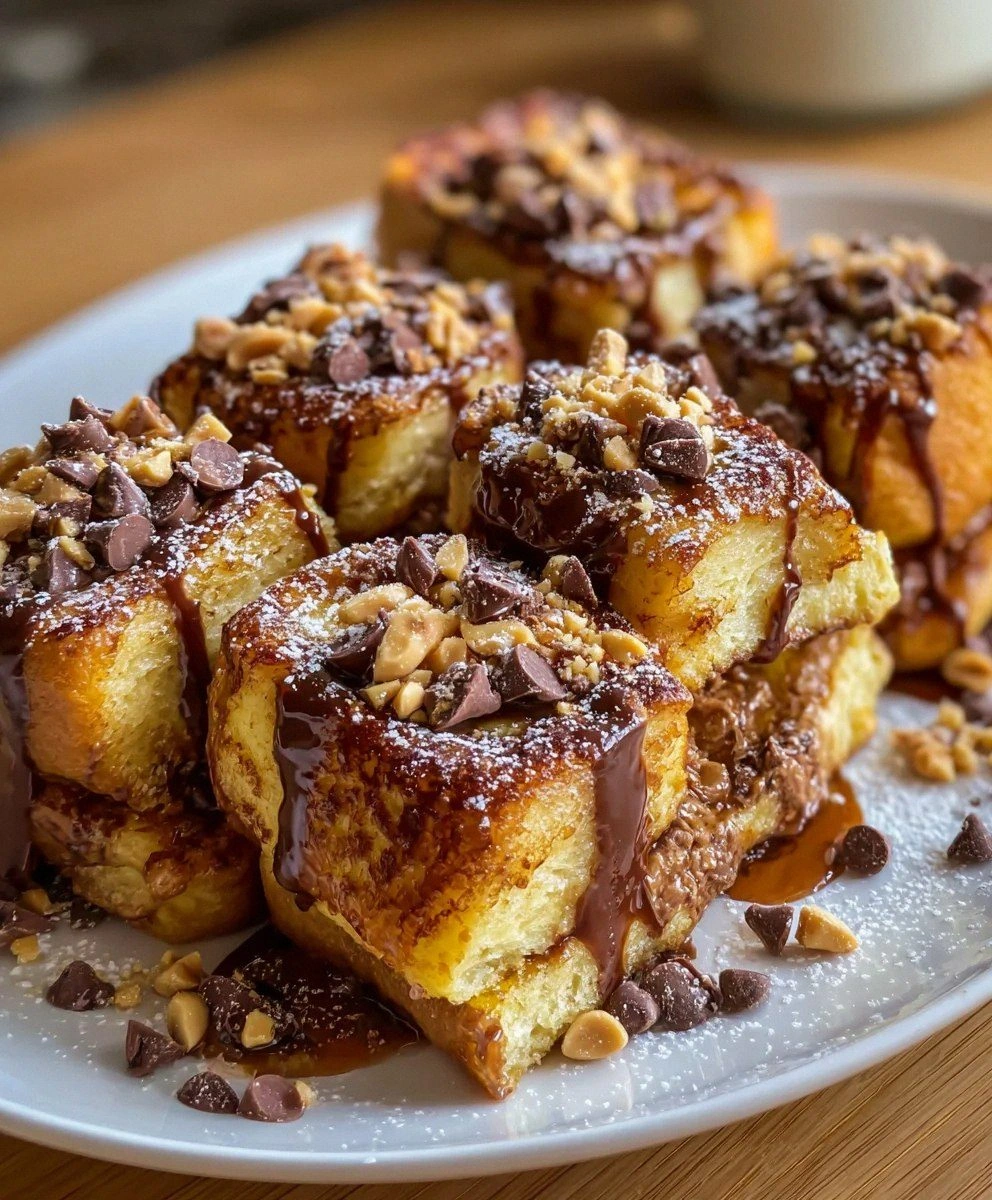
This is not the dry, eggy brick you endured at summer camp. This is custard-soaked brioche that crackles like crème brûlée when your fork hits it, releasing a puff of peanut-butter-chocolate steam that makes the whole kitchen smell like a Reese’s cup melted inside a bakery. The edges caramelize into lacey frills, the center stays pudding-soft, and the peanut butter swirls fuse with the cocoa to create pockets of molten goodness that ooze onto your plate like slow-moving lava. I dare you to taste this and not go back for seconds; I personally ate half the batch before anyone else got to try it, standing over the stove with a fork in one hand and shame in the other, and I regret nothing.
Picture yourself pulling this out of the skillet, the butter hissing around the edges, the chocolate chips just beginning to surrender their shape, the roasted peanuts popping like tiny fireworks. The first bite is a temperature rollercoaster: warm custard, melty chips, cool maple syrup sliding across the top. Your brain will not know whether to categorize this as breakfast or dessert, so it simply registers joy. If you have ever struggled with French toast that turns out wet in the middle or tastes like scrambled eggs wearing bread costumes, you are not alone—and I have the fix.
Let me walk you through every single step—by the end, you will wonder how you ever made it any other way.
What Makes This Version Stand Out
- Velvet-Custard Core: Instead of the usual milk-and-egg slurry, we whip Greek yogurt into the mix, turning the soaking liquid into a tangy, protein-rich custard that sets like silk without that dreaded eggy aftertaste. Most recipes get this completely wrong—too much dairy, not enough acid, zero structure. Here’s what actually works.
- Peanut Butter Infusion, Not Just Topping: We melt the peanut butter right into the custard so every microscopic pore of bread carries nutty depth. No sad, dry center bites, no cloying schmear sliding off the top. The flavor bakes in, not on.
- Double-Chocolate Architecture: Unsweetened cocoa in the batter gives a bitters backbone, while strategically placed chips create molten puddles that burst like geysers when you cut through. Think of it as a built-in chocolate sauce that never over-sweetens.
- Day-Old Brioche Magic: Fresh bread collapses into mush; stale brioche soaks up custard like a greedy sponge and still holds its shape. Day-old bread works best as it absorbs custard beautifully, but if you only have fresh, I will show you a 10-minute cheat that fakes staleness without turning your kitchen into a desert.
- One-Bowl Brilliance: No separate sauce, no stuffing, no overnight wait. The entire masterpiece happens in a single mixing bowl and one skillet. Okay, ready for the game-changer? You can prep the custard the night before, stash it in the fridge, and wake up looking like a brunch wizard while everyone else is still rubbing sleep from their eyes.
- Crunch-to-Cream Ratio: Roasted peanuts pressed onto the soaking slices toast in the butter, giving you crispy edges that shatter like thin ice against the soft interior. That contrast is what separates diner hash-slingers from breakfast legends.
- Freezer-Friendly Future: Flash-freeze the cooked slices on a tray, then bag them. Weekday morning reheat takes 90 seconds in the toaster oven and tastes fresh enough to make coworkers weep with envy.
Alright, let’s break down exactly what goes into this masterpiece...
Inside the Ingredient List
The Flavor Base
Natural creamy peanut butter is the soul of this operation. Skip the sugary, stabilized brands that taste like candy frosting; you want the pure peanut intensity that only the natural stuff delivers. It melts seamlessly into warm custard, creating rivers of nutty flavor that permeate every crumb. If you only have the sweetened kind, dial back the brown sugar by half or risk breakfast that feels like you are chewing on a PB&J sandwich that has been left in a sauna.
The Texture Crew
Eggs are the scaffolding. Too few and your toast collapses into bread pudding; too many and you have a rubber omelet wearing brioche shoes. Two large eggs per cup of milk is the golden ratio I landed on after seven tries and one very eggy failure that could have bounced off the floor. Skim milk or unsweetened almond milk builds the custard while adding creaminess—use almond milk for a dairy-free alternative, but add an extra teaspoon of peanut butter to compensate for the loss of richness.
Greek yogurt is the stealth MVP. It thickens the custard just enough to cling to the bread without sliding off like sad wallpaper paste, plus its tang brightens the chocolate and peanut butter so the whole thing does not feel heavy enough to sink a kayak. Substitute with dairy-free yogurt if needed, but choose an unsweetened variety or the flavor balance tips toward dessert territory faster than you can say “nutritional yeast is not cheese.”
The Unexpected Star
Unsweetened cocoa powder is the quiet genius. It deepens the chocolate notes without adding sugar, so the dish stays breakfast-appropriate while still delivering that candy-bar nostalgia. Bloom it for 30 seconds in the warm custard and watch it transform from dusty brown to glossy midnight—pure magic. Dutch-processed gives smoother flavor, but natural works if that is what is lurking in your pantry.
The Final Flourish
Dark chocolate chips are the fireworks at the end. Fold them into the soaked slices right before they hit the pan so they stay intact long enough to create those molten pockets. Chips with 60–70 % cacao hit the sweet-bitter balance; anything darker and kids will look betrayed, any lighter and you lose sophistication. Chopped roasted peanuts are optional, but they add a delightful crunch that contrasts with the soft texture of the bread. Toast them for two minutes in a dry skillet first and the flavor jumps from “nice” to “I need to sit down.”
Everything’s prepped? Good. Let’s get into the real action...
The Method — Step by Step
- Start with a shallow bowl wide enough to lay a slice of brioche flat. Whisk together eggs, milk, yogurt, peanut butter, cocoa, brown sugar, vanilla, and salt until the mixture looks like melted chocolate ice cream. Tiny flecks of peanut are fine—those become flavor bombs later. I dare you to taste this custard and not go back for spoonful number three; I have to hide the bowl from myself or there is none left for the bread.
- Preheat your skillet over medium-low for a full four minutes. This slow heat-up prevents hot spots that scorch the delicate custard. Drop in a teaspoon of butter; when it foams gently and smells like hazelnuts, you are dialed in. Too hot and the outside burns before the inside cooks—patience here is the difference between brunch glory and Instagram shame.
- Lay your day-old brioche slices on a cutting board. If your bread is fresh, fake staleness by placing slices in a 200 °F oven for 12 minutes, flipping halfway. The goal is to dehydrate the surface just enough so it can drink up custard without falling apart. Underneath that dry exterior the crumb should still feel springy—think of it as giving the bread a camel’s hump to store custard.
- Dunk one slice into the custard for exactly 15 seconds per side. Longer and you risk bread that breaks when you lift it; shorter and you get that disappointing dry middle we are outlawing today. Use your fingers to press gently so the custard seeps into every canyon. When you flip, you should see the slice plump like a down pillow after a long winter nap.
- Lay the soaked slice on a plate and sprinkle a tablespoon of chocolate chips across the top, pressing lightly so they adhere. Scatter a teaspoon of chopped roasted peanuts over the chips. These toppings are going to hit the skillet first, toasting and melting into a micro-shell that keeps the custard from sticking and gifts you that textural crackle.
- Slide the slice—topping side down—into the foaming butter. That sizzle when it hits the pan? Absolute perfection. Cook 2 ½ minutes; resist the urge to peek. When the edges turn amber and the chocolate smells like hot cocoa at a ski lodge, it is time to flip. If you see black specks, your heat is too high; lower it for the next round.
- After flipping, cook another 2 minutes. The second side browns faster because the custard is already partially set. Peek underneath; you want a chestnut brown, not a mahogany dark. If the center puffs like a shy soufflé, you nailed the custard ratio—congratulations, you are now technically a breakfast sorcerer.
- Transfer the slice to a wire rack set over a baking sheet and park it in a 250 °F oven while you repeat with remaining slices. The gentle heat finishes the custard without over-browning, so every piece is ready at the same time. Future pacing: imagine bringing a platter of synchronized, piping-hot perfection to the table while everyone else is still hunting for the syrup.
- Just before serving, return the slices to the skillet for 30 seconds per side to re-crisp the edges. This final flash gives you that diner griddle aroma and re-melts the chocolate so it flows like fondant when you cut in. Stack two slices on warm plates, drizzle with maple syrup or honey, and brace yourself for the moment the room goes quiet except for the scrape of forks and happy groans.
That’s it—you did it. But hold on, I have got a few more tricks that’ll take this to another level...
Insider Tricks for Flawless Results
The Temperature Rule Nobody Follows
Most recipes get this completely wrong: they crank the heat to medium-high and wonder why the custard scrambles. Keep your burner between low and medium-low—think of it as the difference between tanning and burning. The custard needs time to set gently, like silk setting in cool water. A friend tried skipping this step once—let’s just say it didn’t end well, and her dog still refuses to eat the evidence off the floor.
Why Your Nose Knows Best
Trust the aroma checkpoints. When the butter smells like toasted hazelnuts, you are primed. When the chocolate hits the skillet and releases a hot-cocoa perfume, flip. When the peanuts toast and smell like ballpark snacks, you are 30 seconds from done. Ignore the clock if your nose disagrees—ovens, pans, and even the humidity in the air can shift timing, but your olfactory system never lies.
The 5-Minute Rest That Changes Everything
After cooking, let the slices rest on the wire rack for five full minutes. The custard finishes setting, the chocolate regains its glossy snap, and the surface dries just enough to hold syrup without turning into a soggy mess. I used to skip this—impatience is my love language—and the middles would collapse under the syrup like wet tissue paper. Patience turns good French toast into the kind that makes people close their eyes after the first bite.
Creative Twists and Variations
This recipe is a playground. Here are some of my favorite ways to switch things up:
Bananas Foster Flip
Swap the peanut butter for almond butter, layer thin banana coins on the custard-soaked bread, and finish with a quick flambé of dark rum in the skillet. The bananas caramelize into jammy coins that taste like New Orleans on a Saturday night. Kids love the drama of the blue flame; adults love that they can pretend this is still breakfast.
Salted Caramel Pretzel Crunch
Replace peanuts with crushed pretzels and swirl a teaspoon of caramel sauce into the custard. The pretzels toast into salty shards that contrast with the sweet caramel, giving you that mall-kiosk vibe without the food-court regret. Drizzle extra caramel over the top and watch it seep into the crevices like edible lava.
White Chocolate Raspberry Dream
Use white chocolate chips and fold a tablespoon of raspberry jam into the custard for a PB&J gone to finishing school. The tart berries cut through the richness like a squeeze of lemon on fried chicken, and the white chocolate melts into creamy pools that look like sunrise over mountains.
Coconut Curry Curveball
Sub out peanut butter for coconut almond butter, add a pinch of curry powder and a tablespoon of shredded toasted coconut. Sounds wild, but the warm spices dance with cocoa in a way that tastes like Mumbai meeting Belgium. This version pairs ridiculously well with strong black coffee and a side of mango slices.
Mocha Hazelnut Indulgence
Stir a teaspoon of instant espresso into the custard and swap peanuts for chopped hazelnuts. The result tastes like a Ferrero Rocher took a spa day in a skillet. I served this at a bridal shower once and three guests asked me to cater their weddings—apparently mocha equals marriage material.
Campfire S’mores Edition
Replace chocolate chips with mini marshmallows and graham cracker crumbs. Torch the tops with a kitchen torch for that campfire char, then drizzle with chocolate syrup. Kids will lose their minds; adults will pretend they are only eating it “for the kids.”
Storing and Bringing It Back to Life
Fridge Storage
Layer cooled slices between sheets of parchment in an airtight container; they will keep three days without drying out. Reheat in a toaster oven at 325 °F for 6 minutes—no microwave unless you enjoy rubber coasters. Add a tiny splash of water on the tray before reheating—it steams back to perfection and revives that just-cooked softness.
Freezer Friendly
Flash-freeze slices on a parchment-lined tray until solid, then transfer to a zip-top bag with the air squeezed out. They will keep two months, though they rarely last a week in my house because late-night cravings are real. Label the bag or you will play frozen French-toast roulette at 1 a.m. and lose to a mystery chili.
Best Reheating Method
Toaster oven beats skillet on reheats because it re-crisps both sides evenly. Microwave plus skillet works in a pinch: nuke 20 seconds to thaw the center, then crisp in a hot skillet 45 seconds per side. If you are camping, wrap frozen slices in foil and park them near the campfire embers for five minutes, turning once—smoky edges taste like vacation memories.