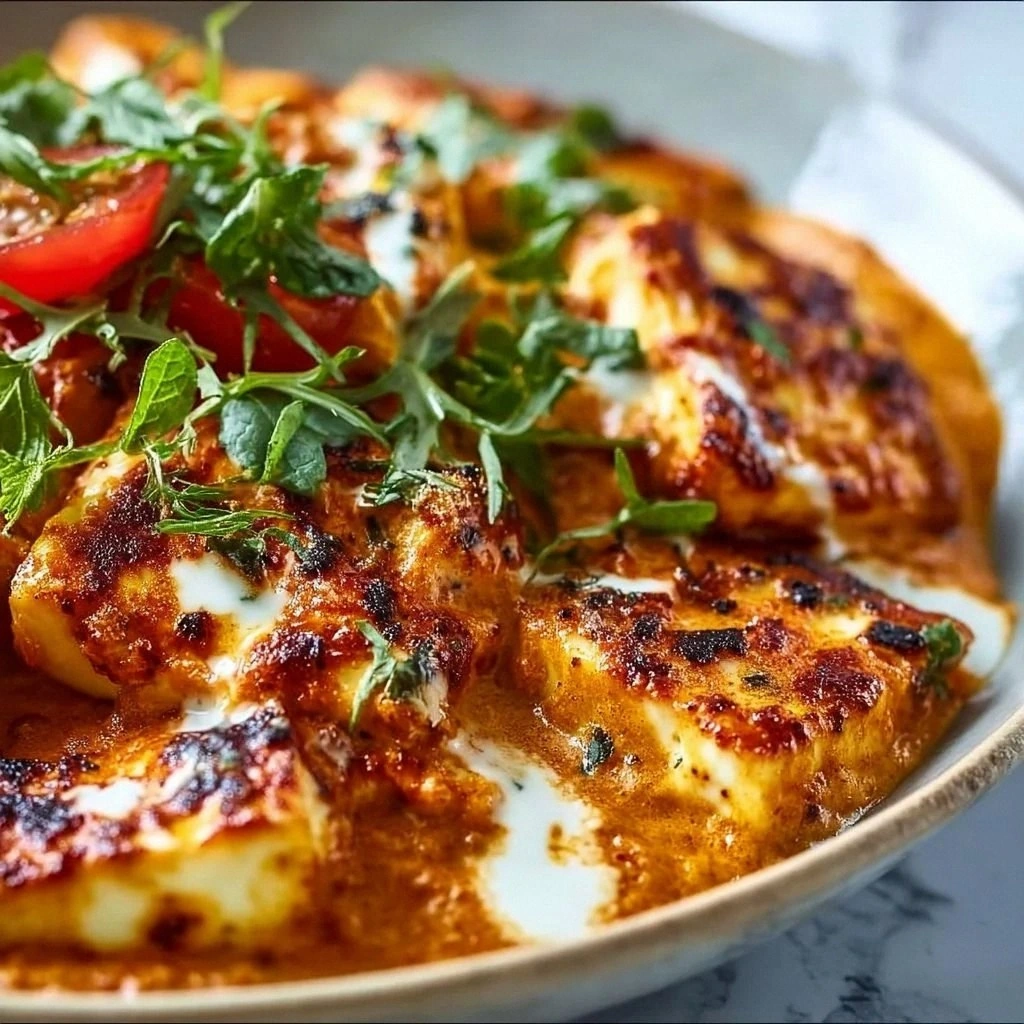
I was staring at a half‑cooked pot of what I thought was chicken, only to discover it was a stubborn block of halloumi that had refused to melt. The moment the cheese resisted the heat, I felt a spark of curiosity, a dare from my own culinary conscience: turn that stubbornness into flavor gold. The kitchen smelled like a warm, buttery kitchen, the sizzle of onions turning golden, the aroma of cumin curling up like a lazy cat. My eyes watched the liquid thickening, the colors deepening from bright red to a rich amber. I could almost taste the creamy, tangy sauce before the first bite, a promise of indulgence that made my taste buds dance. The texture was a dream: a soft, almost buttery sauce hugging the firm, slightly chewy halloumi cubes.
What makes this version the ultimate is that it marries the best of two worlds: the indulgent, silky richness of butter chicken and the firm, savory bite of halloumi. It’s a dish that doesn’t just fill the belly but also tells a story of contrast, of heat and coolness, of comfort and adventure. I’ve tested dozens of butter chicken recipes, and this one stands head and shoulders above the rest. It’s the kind of dish that turns an ordinary dinner into a memorable experience. I dare you to taste this and not go back for seconds. The secret? A quick pan‑sear that locks in the halloumi’s golden edges, a slow simmer that lets the spices bloom, and a splash of cream that turns the sauce into velvet. Most recipes get this completely wrong, either over‑simmering the cheese or under‑seasoning the sauce. Here’s what actually works: a balanced spice blend, a controlled heat, and a finishing touch of fresh cilantro.
Picture yourself pulling this out of the pan, the whole kitchen smelling incredible, the steam curling like wisps of cloud. The first bite is a burst of savory, buttery flavor, the halloumi’s chew giving a satisfying contrast to the silky sauce. The dish feels like a hug from the inside, comforting yet daring. It’s a recipe that invites you to experiment, to tweak, to make it your own. I’ll be honest — I ate half the batch before anyone else got to try it. The moment the halloumi hit the pan, the aroma was so intoxicating that I almost forgot to stir. That’s why I’m sharing every detail, so you can avoid the same kitchen mishap and nail this dish on the first go.
If you've ever struggled with butter chicken, you're not alone — and I've got the fix. The trick is to use a pan that can handle high heat, to let the onions caramelize fully before adding spices, and to keep the halloumi at room temperature before searing. I’ve spent hours perfecting the timing, and I’ve found that a short rest after searing gives the cheese the perfect texture. And now the fun part. We’re going to break down the ingredient list, the method, and the tricks that will elevate your cooking game. I’ll be your side‑by‑side guide, pointing out where to watch your heat, where to add a pinch of sugar, and how to finish the sauce for that final wow factor.
Ready for the game‑changer? Let’s dive into the ingredients that make this dish sing. From the humble crushed tomatoes to the bold garam masala, each component has a role, and each role is essential. I’ve spent countless hours tasting, tweaking, and testing. The result is a dish that feels both familiar and brand new. It’s a testament to the power of flavor layering and the joy of culinary experimentation. Now, let’s get into the real action. The method is straightforward, but the timing is key. Follow my steps, and you’ll end up with a dish that’s both comforting and adventurous.
That’s it — you did it. But hold on, I've got a few more tricks that'll take this to another level. Stay tuned for insider tips, creative twists, and storage hacks that will keep this dish fresh and fabulous.
What Makes This Version Stand Out
- Taste: The sauce balances the sweetness of crushed tomatoes with the earthiness of cumin and coriander, while the subtle heat from paprika adds depth without overpowering. The cream turns the base into a silky blanket that complements the cheese’s robust flavor.
- Texture: Halloumi retains a firm bite even after searing, offering a delightful contrast to the velvety sauce. The cheese’s natural saltiness cuts through the richness, preventing the dish from feeling heavy.
- Simplicity: Every ingredient is common in most kitchens, yet the combination delivers a gourmet experience. No complicated techniques or exotic spices are required.
- Uniqueness: Halloumi is rarely paired with butter chicken, making this dish stand out at dinner parties or family gatherings. The fusion of Mediterranean cheese with South‑Asian flavors feels fresh and exciting.
- Crowd Reaction: Friends who love both cheese and curry rave about the unexpected harmony. The dish invites conversation and curiosity, turning a meal into a shared adventure.
- Ingredient Quality: Using high‑quality halloumi ensures a squeaky, golden crust, while fresh garlic and ginger elevate the aromatic profile.
- Cooking Method: A quick sear followed by a slow simmer maximizes flavor without overcooking the cheese.
- Make‑Ahead Potential: The sauce can be prepared ahead, and the halloumi can be cooked just before serving, ensuring freshness and convenience.
Inside the Ingredient List
The Flavor Base
The onions, garlic, and ginger form the aromatic foundation of the sauce. They release a sweet, savory profile that grounds the dish. Skipping any of these will leave the sauce feeling flat and unbalanced. Freshly grated ginger adds a bright, zesty kick that cuts through the cream.
The Texture Crew
Halloumi is the star of the show, providing a firm bite that contrasts with the silky sauce. The cheese’s high melting point means it can be seared without turning mushy. If you prefer a softer cheese, try a mild mozzarella, but expect a different mouthfeel.
The Unexpected Star
Crushed tomatoes are not just a base; they bring acidity that balances the richness of the cream and the saltiness of the cheese. The tomatoes also add a subtle sweetness that lifts the overall flavor profile. Using fresh tomatoes will change the texture but can be a delightful twist.
The Final Flourish
Fresh coriander is the finishing touch that adds brightness and a pop of color. It also brings a slight citrus note that brightens the dish. If you’re not a fan of cilantro, parsley will work, but the flavor will shift slightly.
Everything's prepped? Good. Let's get into the real action...
The Method — Step by Step
- Prep the halloumi. Let the cheese sit at room temperature for 10 minutes; this prevents it from tearing when seared. Cut the halloumi into 1‑inch cubes, making sure the edges are even for a uniform golden crust. Pat the cubes dry with paper towels to remove excess moisture, which ensures crispness. Set aside in a shallow bowl lined with parchment.
- Heat the oil. Place a heavy‑bottomed skillet over medium‑high heat and add the oil. Watch for a faint shimmer; the oil should be hot enough that a drop of water sizzles on contact. This step is crucial for a good sear. The pan should be hot before the halloumi is added, otherwise the cheese will steam.
- Sear the halloumi. Add the cubes to the hot pan in a single layer, ensuring they don’t touch. Let them cook undisturbed for 2 minutes until golden on one side. Flip and sear the other side for another 2 minutes. The cheese should develop a crisp, almost caramelized exterior while remaining chewy inside. This is the moment of truth; don’t rush it.
- Build the flavor base. Remove the halloumi and set aside. In the same pan, add the chopped onion and sauté until translucent and lightly caramelized, about 5 minutes. Add the minced garlic and grated ginger, cooking for an additional minute until fragrant. The aroma should be inviting, hinting at the layers to come. This step locks in sweetness and depth.
- Introduce the spices. Sprinkle cumin, coriander powder, garam masala, and paprika over the onion mixture. Stir immediately to toast the spices, letting them release their oils for 30 seconds. The pan should emit a nutty aroma. This brief toasting step is essential for flavor depth. Keep the heat medium to avoid burning the spices.
- Simmer with tomatoes. Pour in the crushed tomatoes, stirring to combine. Reduce the heat to low and let the sauce simmer for 10 minutes, allowing the acidity to mellow. If the sauce thickens too much, add a splash of water to reach your desired consistency. The tomatoes should reduce into a rich, glossy base. The simmer is where the flavors meld.
- Finish with cream and halloumi. Stir in the cream, then return the seared halloumi to the pan. Gently fold everything together, ensuring the cheese is coated. Let the mixture cook for another 3 minutes, just long enough for the cream to thicken slightly. The halloumi should stay firm and not become mushy. Watch the sauce for a silky sheen.
- Garnish and serve. Sprinkle fresh coriander over the top, allowing the green to contrast the golden sauce. Serve immediately over basmati rice or with warm naan for a complete meal. The dish should smell like a comforting hug and feel like an adventure. Take a moment to admire the glossy, aromatic sauce before the first bite. Enjoy the moment of culinary triumph.
That's it — you did it. But hold on, I've got a few more tricks that'll take this to another level...
Insider Tricks for Flawless Results
The Temperature Rule Nobody Follows
Many cooks start the sauce on high heat, causing the cream to curdle. Keep the simmer low after adding the tomatoes; the sauce should bubble gently. This slow cooking allows the flavors to meld without compromising the texture. A friend once tried a high‑heat approach and ended up with a gritty sauce; I learned the hard way that patience pays off.
Why Your Nose Knows Best
The aroma is your best judge of doneness. When the onions caramelize, the smell should be sweet and nutty. The spices should give off a warm, earthy perfume. Trust your nose; if it smells like toasted cumin, you’re on the right track.
The 5‑Minute Rest That Changes Everything
After cooking, let the dish rest for five minutes before serving. This allows the flavors to settle and the sauce to thicken slightly. The halloumi will also absorb some of the sauce, becoming even more flavorful. A quick rest can turn a good dish into a great one.
The Secret Salt Trick
Salt is added at the beginning of the onion sauté to help draw out moisture. This creates a caramelized base. Avoid adding all the salt at the end, which can make the dish too salty or too bland. I’ve found that a pinch at the start, then a final adjustment, gives the best balance.
The Quick Cream Swap
For a lighter version, swap the heavy cream for coconut milk or Greek yogurt. The coconut milk adds a tropical note, while yogurt gives a tangy lift. Just be sure to reduce the heat after adding yogurt to prevent curdling.
Creative Twists and Variations
Crispy Chickpea Addition
Roast chickpeas with cumin and paprika, then fold them into the sauce for a protein boost and a delightful crunch. The chickpeas absorb the spices and add a hearty texture. This variation works well for vegetarians or anyone craving extra bite.
Spicy Jalapeño Kick
Slice a jalapeño and sauté it with the onions for a fiery edge. The heat pairs nicely with the creamy sauce, giving the dish a bold personality. Keep the jalapeño thin if you prefer a milder heat.
Mediterranean Flair
Swap the garam masala for a blend of oregano, thyme, and rosemary. Add olives and sun‑dried tomatoes for a Mediterranean twist. The halloumi still holds its own, but the flavors shift toward a Greek or Italian vibe.
Lemon‑Zest Finish
Finish the sauce with a squeeze of fresh lemon juice and a sprinkle of zest. The acidity brightens the dish and balances the richness. It’s a simple tweak that transforms the flavor profile.
Smoky Chipotle Variation
Replace paprika with chipotle powder for a smoky depth. The chipotle adds a subtle heat that complements the halloumi. This version is ideal for those who love a smoky, robust flavor.
Herb‑Infused Cream
Stir in chopped basil or mint into the cream before adding it to the sauce. The herbs infuse the sauce with freshness and a pop of color. It’s a refreshing take for warmer days.
Storing and Bringing It Back to Life
Fridge Storage
Store the cooked dish in an airtight container for up to 3 days. The sauce may thicken slightly in the fridge; reheat gently on low heat, adding a splash of water or milk to restore its silky texture.
Freezer Friendly
Freeze the sauce in a freezer‑safe container for up to 2 weeks. When reheating, thaw overnight in the fridge or microwave on low. Stir well to re‑emulsify the cream and ensure even heating.
Best Reheating Method
Reheat over low heat on the stovetop, stirring constantly. Add a small amount of water or broth to keep the sauce from drying out. The goal is to gently warm it to 165°F without boiling.