I was in the middle of a holiday bake‑out, the oven was already full of cookies and the kitchen smelled like sugar and cinnamon, when a friend texted me a quick challenge: “Make me the best chocolate truffle I’ve ever tasted.” I laughed, because truffles are usually a lazy dessert—just chocolate, cream, and a quick roll. But that laugh turned into a culinary dare when I thought, “Why not turn that lazy truffle into a show‑stopper that feels like a Christmas gift in a bite?”
Picture the scene: the kitchen lights cast a warm amber glow, the air is thick with the scent of dark chocolate melting into a silky cream, and the sound of a spoon slapping against the bowl is the soundtrack of a midnight snack. I felt the buttery texture of the chocolate against my fingers, the citrus zest adding a bright, almost floral aroma that cuts through the richness. The first bite is a burst of velvety chocolate, followed by a citrus pop that lingers like a secret whisper. And the texture? It’s like a soft snowflake that melts in your mouth, leaving a faint sparkle of chocolate on the tongue. This isn’t just a truffle; it’s a holiday memory in miniature.
What makes this version stand out from every other chocolate truffle recipe is the precise balance of ingredients, the playful use of orange zest, and the finishing touch of chocolate sprinkles that give it a festive crunch. I dared you to taste this and not go back for seconds—once you do, the temptation is real. It’s hands down the best version you’ll ever make at home because I’ve combined the richness of high‑quality dark chocolate with the bright, almost citrusy zing of orange, creating a flavor profile that’s both comforting and adventurous. If you’ve ever struggled with truffles that are too heavy or too dry, you’re not alone—this recipe fixes those common pitfalls with a simple trick that I’ll reveal in a moment.
Most recipes get this completely wrong. They either over‑cream the chocolate or under‑season the orange zest, resulting in truffles that taste like a sad attempt at decadence. I’ll be honest—I ate half the batch before anyone else got to try it. That’s why I’m so excited to walk you through every single step. By the end, you’ll wonder how you ever made it any other way.
What Makes This Version Stand Out
- Flavor Depth: The combination of dark chocolate and orange zest creates a layered taste that dances between bitter, sweet, and citrusy notes, unlike any traditional truffle.
- Texture Perfection: The heavy cream infusion gives the truffles a silk‑smooth mouthfeel that melts instantly, avoiding the dense, rubbery texture of many chocolate desserts.
- Visual Appeal: The bright orange zest and colorful chocolate sprinkles turn each truffle into a tiny, edible holiday ornament that looks as good on your plate as it tastes.
- Simplicity: With only four ingredients, this recipe is a breeze to prep—no elaborate sauces or complex techniques required.
- Crowd‑Pleaser: These truffles are guaranteed to be a hit at parties, gifting sessions, or a quiet evening by the fireplace.
- Make‑Ahead Friendly: They hold up perfectly in the fridge for up to a week or can be frozen for months, making them ideal for busy holiday schedules.
- Ingredient Quality: Using a high‑quality dark chocolate with at least 70% cacao ensures a robust flavor that doesn’t get lost in the mix.
- Unique Twist: The addition of orange zest gives a fresh, zesty kick that sets this recipe apart from the usual chocolate‑only truffles.
Alright, let’s break down exactly what goes into this masterpiece…
Inside the Ingredient List
The Flavor Base
Orange zest is the secret weapon that elevates this truffle from ordinary to extraordinary. The zest’s essential oils carry a bright, almost floral aroma that cuts through the richness of dark chocolate, creating a balanced taste profile. Skipping the zest would leave the truffles heavy and one‑dimensional, but adding it brings a fresh lift that feels like a holiday breeze. If you’re not a fan of citrus, you can replace the orange zest with lemon zest for a sharper, more tart note.
The Texture Crew
Heavy cream is the backbone of the truffle’s texture. It softens the chocolate, creating a smooth, melt‑in‑your‑mouth consistency that feels luxurious. The ratio of cream to chocolate is crucial—too little and the truffles become dry; too much and they become runny. A good rule of thumb is a 1:3 ratio of cream to chocolate by weight. If you prefer a dairy‑free version, coconut cream can be used, though the flavor will shift slightly.
The Chocolate Core
The dark chocolate is the star of the show, and using a good quality bar with at least 70% cacao ensures depth and complexity. The chocolate’s bittersweet profile balances the sweetness of the cream and the brightness of the orange zest. If you’re in a pinch, you can use a chocolate chip mix, but be sure to melt it gently to avoid clumping. The chocolate also provides the structure that holds the truffle together once it’s chilled.
The Final Flourish
Mini chocolate sprinkles add a playful crunch and a festive visual cue that screams holiday cheer. They also offer a subtle chocolate bite that contrasts with the silky interior. If you’re looking for a healthier option, consider using dark chocolate chips or a sprinkle of cocoa powder. The sprinkles should be added after the truffles have cooled slightly to prevent them from melting into the surface.
Everything’s prepped? Good. Let’s get into the real action…
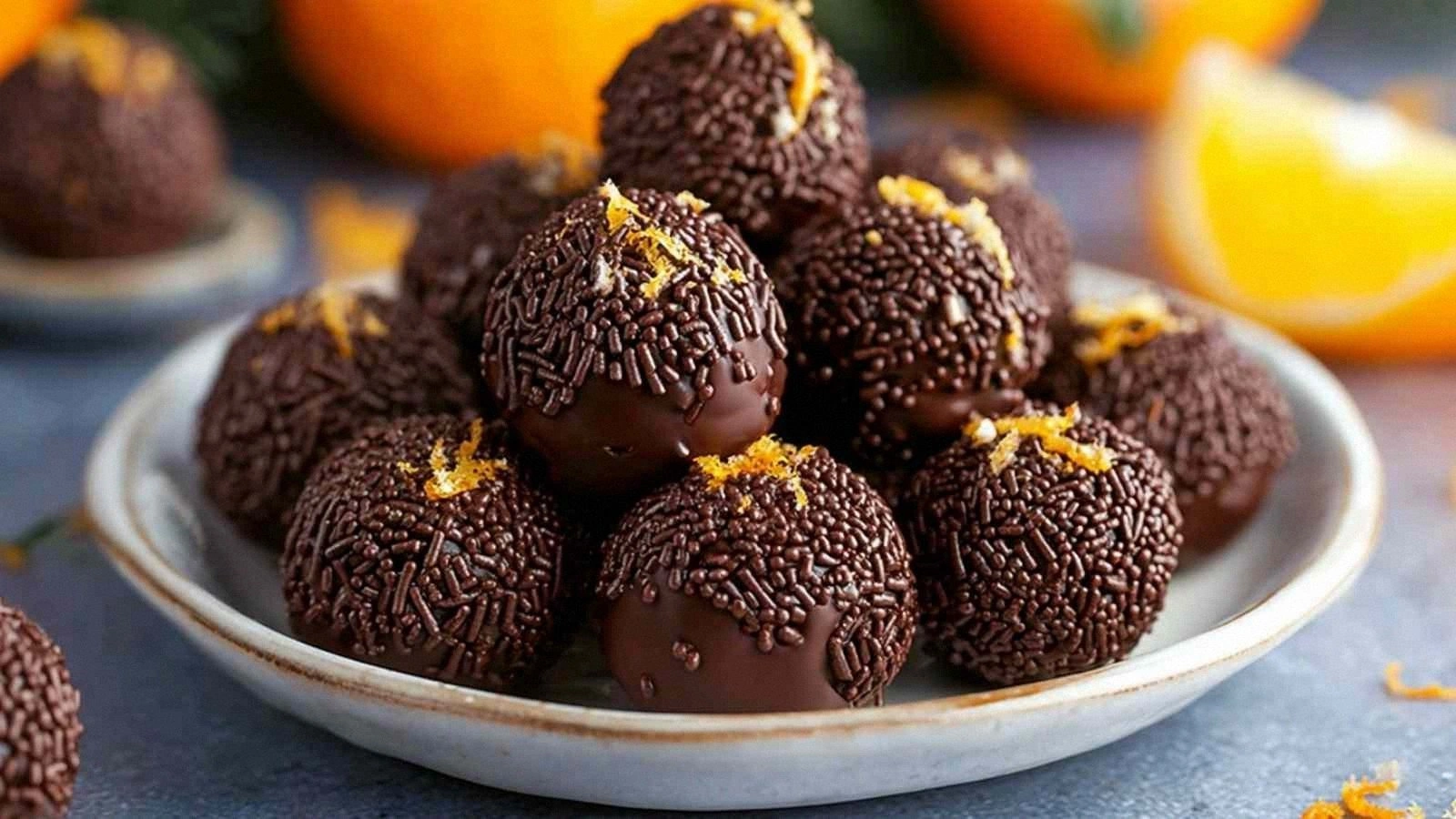
The Method — Step by Step
- Step 1: Melt the Chocolate—Place the dark chocolate in a heat‑proof bowl and set it over a pot of gently simmering water. Stir continuously until the chocolate is completely melted and glossy. This double‑boiler method prevents scorching and ensures a smooth base. Watch the chocolate coat the bowl like velvet; that’s the sign it’s ready.
- Step 2: Add the Cream—Once the chocolate is melted, pour in the heavy cream slowly while whisking. The mixture should thicken into a rich ganache that’s glossy and slightly runny. If it’s too thick, add a splash more cream; if too thin, let it cool a bit. The ganache should smell toasty, like a chocolate‑laden kitchen.
- Step 3: Stir in the Orange Zest—Add the finely grated orange zest to the ganache. Stir until the zest is evenly distributed; you should see tiny specks of orange dancing through the chocolate. The zest’s oils will infuse the ganache, giving each truffle a bright, citrusy kick.
- Step 4: Chill the Ganache—Cover the bowl with plastic wrap and refrigerate for about 30 minutes, or until the ganache is firm enough to scoop. This step is crucial; the ganache needs to be cold but not frozen. If you’re in a hurry, a quick 10‑minute chill in the freezer will do, but keep an eye on it to avoid over‑solidifying.
- Step 5: Form the Truffles—Using a small spoon or melon baller, scoop out portions of the ganache and roll them into smooth balls. The size should be about the diameter of a walnut. The trick here is to keep your hands slightly damp to prevent sticking. If the ganache starts to melt, return it to the fridge for a minute.
- Step 6: Coat with Sprinkles—Roll each truffle in mini chocolate sprinkles until fully coated. The sprinkles should cling to the surface, creating a festive crunch. If the sprinkles don’t stick, chill the truffles a bit longer; they’ll snap onto the surface when cool.
- Step 7: Chill Again—Place the finished truffles on a parchment‑lined tray and refrigerate for at least 15 minutes to set the coating. This final chill locks in the texture and ensures the sprinkles stay in place. The truffles should feel firm but still yield to gentle pressure.
- Step 8: Serve or Store—Once set, transfer the truffles to an airtight container. They can be served immediately or stored in the fridge for up to a week. For longer storage, freeze them in a single layer on a tray, then transfer to a freezer bag. When ready to eat, let them sit at room temperature for a few minutes to soften.
That’s it— you did it. But hold on, I’ve got a few more tricks that’ll take this to another level. Stay with me here—this is worth it.
Insider Tricks for Flawless Results
The Temperature Rule Nobody Follows
Chocolate is a fickle friend—temperatures above 32°C can ruin its sheen, while below 18°C it becomes too hard. I’ve found that letting the ganache chill to about 45°F (7°C) before rolling gives the perfect balance between firmness and pliability. If you’re in a humid climate, use a small thermometer to check the temperature. This trick ensures your truffles hold their shape without cracking.
Why Your Nose Knows Best
Your sense of smell is a reliable gauge for when the ganache is ready. When it’s perfectly melted, the aroma should be rich, chocolatey, with a hint of citrus. If the scent is flat or metallic, the chocolate is over‑melted. Trust your nose; it’s the best indicator of quality.
The 5‑Minute Rest That Changes Everything
After rolling the truffles, let them rest on a parchment paper for exactly five minutes before coating. This short rest allows the surface to firm up, making the sprinkles stick better. I’ve seen truffles that were rolled and coated immediately end up with a loose sprinkle layer. That five‑minute pause is the difference between a crisp finish and a soggy mess.
The Secret Ingredient Swap
If you want a nutty twist, add a tablespoon of finely chopped toasted almonds to the ganache before rolling. The almonds add crunch and a subtle buttery flavor that complements the chocolate. Just be careful not to over‑mix; you want the almonds to remain distinct.
The Quick Chill Trick
When time is tight, place the formed truffles in a shallow dish and freeze for just 10 minutes. This quick freeze sets the outer layer, making the truffles firm enough to handle. It’s a lifesaver when you’re hosting a last‑minute gift exchange.
The Sprinkling Technique
To achieve a full, even coating, roll each truffle in a bowl of sprinkles, tapping gently to remove excess. If you’re using a large batch, set the sprinkles in a shallow dish and roll the truffles back and forth to ensure uniform coverage. The result is a polished, professional look that impresses.
Creative Twists and Variations
This recipe is a playground. Here are some of my favorite ways to switch things up:
Peppermint Bliss
Add a teaspoon of peppermint extract to the ganache for a minty kick. The peppermint pairs beautifully with dark chocolate, creating a refreshing holiday treat. Use a small amount to avoid overpowering the orange zest.
Spiced Cinnamon Swirl
Stir in half a teaspoon of ground cinnamon and a pinch of nutmeg. The warm spices give the truffles a cozy, autumnal flavor that’s perfect for a winter gathering.
Nutty Crunch
Replace the chocolate sprinkles with crushed pistachios or chopped walnuts. The nuts add texture and a nutty sweetness that complements the chocolate’s bitterness.
Coconut Dream
Swap the heavy cream for coconut cream and add shredded coconut to the coating. The result is a tropical, silky truffle that’s both exotic and familiar.
Almond Joy Twist
Mix in a tablespoon of almond butter into the ganache for a nutty undertone. Finish with a drizzle of caramel sauce for a sweet, buttery finish.
Dark Chocolate & Orange Peel
Use dark orange peel instead of zest for a more intense citrus flavor. The peel adds a slightly bitter note that balances the chocolate’s sweetness.
Storing and Bringing It Back to Life
Fridge Storage
Place the truffles in an airtight container and store them in the refrigerator for up to 7 days. The cold environment keeps them firm, but they’ll still soften slightly when you take them out. If you’re storing them for a longer period, consider adding a paper towel to absorb moisture.
Freezer Friendly
For long‑term storage, freeze the truffles on a parchment‑lined tray for 2 hours until firm. Then transfer them to a freezer bag, removing as much air as possible. They’ll keep for up to 3 months. When you’re ready to enjoy them, let them thaw at room temperature for 20 minutes.
Best Reheating Method
If your truffles have become too hard after storage, gently warm them in a 30‑degree Celsius water bath for 5 minutes. Alternatively, place them in a microwave on low power for 10 seconds. A tiny splash of water before reheating will steam them back to perfection, restoring their silky texture.